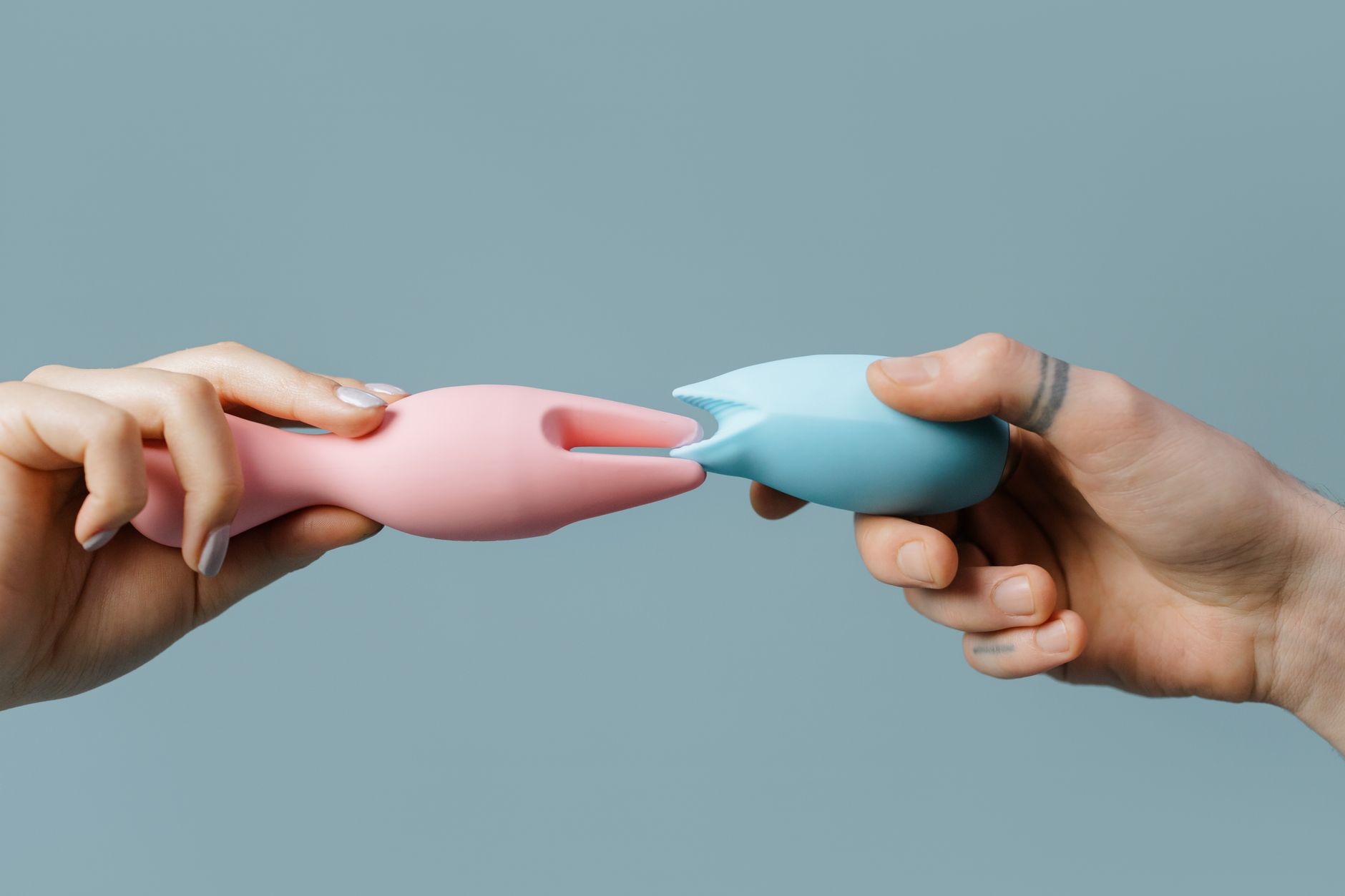
Here's the thing about sensitivity
Sensitivity doesn't mean "broken." It usually means your nerve endings are working perfectly. The problem isn't your body. It's the mismatch between what a tool is doing and what your nerves actually want right now.
Traditional vibrators buzz. They're doing tiny, rapid back-and-forth movements. Lemon clitoral vibrators work differently. They use air-pulse suction, which creates a gentle massaging sensation instead of direct friction. For sensitive users, this matters more than you'd think.
Why traditional vibrators can overwhelm sensitive tissue
A standard vibrator sends between 50 and 10,000 vibrations per second directly into your skin. That's a lot of stimulation happening in a tiny space. If your clitoris is already tender, or if you've been dealing with irritation from medication, hormonal changes, or just months of overstimulation, that direct buzzing can feel like static on a radio that's already too loud.
The issue compounds if you use the vibrator for long stretches. Nerves adapt to constant stimulation. This is called habituation. Your body stops responding the same way. So you push the vibrator harder, use it longer, or crank up the intensity. This creates a feedback loop that leaves you feeling numb instead of satisfied.
That's where many people make a tactical mistake. They assume they're broken. They're not. They're just using the wrong tool for their current state.
How air-suction lemon vibrators work differently
Instead of vibrating, air-pulse lemon vibrators create a gentle suction that feels more like a soft kiss or a massage. The sensation is broader and less intense. Rather than concentrating all the force into direct friction, it distributes stimulation across a larger area of tissue.
This means:
- Lower risk of numbing. Because the stimulation is gentler and more diffuse, your nerves don't fatigue as quickly.
- More sensation control. You can start at pattern 1 and stay there comfortably. You don't automatically jump to level 5 just to feel something.
- Easier recovery. If your clitoris needs a break, a lemon clitoral vibrator won't leave you feeling overstimulated or sore the way intense buzzing can.
Lemon clitoral vibrators are also quieter and feel less mechanical. That matters if you're someone who gets in your head during sex, or if you associate traditional vibrators with numbing sessions that didn't work.
When traditional vibrators still make sense
This isn't a "air-suction is better" argument. It's a "different tools for different moments" reality.
Traditional vibrators are fantastic if you need fast, predictable stimulation. If your body responds well to intense buzzing and you want to get there quickly, a basic bullet or wand vibrator will do the job. They're also cheaper, more durable in some cases, and require less learning curve.
The issue is when someone with sensitivity picks up a traditional vibrator because it's what's available, and then feels worse afterward. That's not a personal failing. That's a mismatch.
The sensitivity spectrum
Sensitivity exists on a scale, and your place on that scale shifts depending on your cycle, your stress level, medication, relationship status, and a dozen other variables.
If you're someone who's always been sensitive, you probably already know this. You've spent years figuring out what works. That knowledge is valuable. Don't let anyone convince you to ignore it.
If you've recently become sensitive after years of doing fine with traditional vibrators, pay attention. This often happens around hormonal transitions, after extended use of numbingly-intense toys, or after a period of stress or relationship change. It's not permanent. But it does mean your current toolkit might need an upgrade.
This is where air-pulse technology can be genuinely helpful. You're not training yourself to tolerate more stimulation. You're matching the tool to where your body actually is right now.
What sensitive users report
In my conversations with people who've switched from traditional vibrators to lemon vibrators, the most common pattern is surprise. They expected to miss the intensity. They don't.
They report:
- Faster arousal (because they're not already irritated)
- More focused pleasure (because the sensation is clear rather than overwhelming)
- Easier orgasms (because they can stay in the zone instead of getting frustrated by too much intensity)
- Less post-session soreness
That doesn't mean lemon clitoral vibrators work for everyone. Nothing does. But for people dealing with sensitivity, the switch often feels like someone finally turned down the volume on static so they could actually hear the music.
How to use a lemon clitoral vibrator if you're coming from traditional toys
Start at the lowest pattern. Not the lowest intensity level. The lowest pattern. Lemon vibrators usually have 3 to 5 different suction patterns, and intensity levels within each pattern. Begin with pattern 1, level 1. It will feel weaker than you expect. That's intentional.
Give it 30 seconds. Your body is used to way more stimulation, so it might take a minute for your nervous system to register that something is happening. Resist the urge to immediately jump up to level 5.
If you're switching from traditional vibrators because of sensitivity or numbness, this slower ramp is actually where the benefit lives. You're teaching your nerves that they don't need to brace for intensity. That relaxation is where better sensation comes from.
Many people find that after a week or two of using a lemon clitoral vibrator at lower intensities, their sensitivity starts coming back. Not magically. But noticeably. They feel more again.
The tool-versus-technique question
Here's something important that doesn't get said enough: if you've been using a traditional vibrator for years and it stopped working, the problem might not be the vibrator. It might be habit.
Your body adapts. If you've been using the same toy, the same pattern, the same movement, the same position for months, your nervous system is going to get bored. This is true regardless of which tool you're using.
Switching to a lemon clitoral vibrator is a way to break that habit. But you could also break it by changing your routine, trying a different position, adding a partner, exploring without the vibrator for a while, or using a completely different toy.
The advantage of air-pulse technology is that it breaks the pattern while also being gentler on sensitive tissue. You get novelty and safety at the same time.
Solo play versus partnered use
Traditional vibrators are straightforward during partnered sex. They work during foreplay, they work during penetration if one partner uses them, they work for finishing up.
Lemon clitoral vibrators require a bit more spatial awareness. You need to be more deliberate about positioning. They're less "grab and go." But they're also less intrusive. If you're someone who's self-conscious about using toys with a partner, the quieter, gentler sensation of a lemon clitoral vibrator can feel less clinical.
If sensitivity has been an issue in your partnered sex, a switch to air-pulse technology sometimes opens a conversation. "This feels better on my body" is easier to say than "that's too intense and it's making me sore."
When to keep a traditional vibrator anyway
Consider keeping both. A traditional bullet or wand vibrator for moments when you want fast, no-thinking stimulation. A lemon clitoral vibrator for when you want to be present and feel more.
You might use the traditional vibrator when you're tired and just want to orgasm quickly before sleep. You might use the air-pulse option when you have time and want to explore more sensation.
This isn't complicated. It's just acknowledging that different moments have different needs.
The bigger picture on sensitivity
If you're sensitive, your body is sending you information. It's saying "this much is too much" or "that tool doesn't match my needs right now." The goal isn't to override that signal by pushing harder. It's to listen to it.
Lemon clitoral vibrators are one way to do that. They're not magic. But they are a different technology that works better for some bodies, especially bodies dealing with sensitivity, numbness, or a history of overstimulation.
The real skill is learning to notice what your body actually wants and then finding tools that match. That's where actual pleasure lives. Not in powering through discomfort. Not in finding the "best" vibrator objectively. But in paying attention to your own signals and acting on them.
People also ask
Are lemon clitoral vibrators less intense than all traditional vibrators?
Not universally. The highest intensity level on a lemon clitoral vibrator can be quite strong. But the way the intensity is delivered is different. It's distributed suction rather than concentrated buzzing. Even at high levels, it feels qualitatively different. Most sensitive users find the sensation more tolerable even at higher settings, because it's not harsh or numbing.
Can I use a lemon clitoral vibrator if I've never had sensitivity issues?
Completely. If you just prefer the sensation of air-pulse stimulation to traditional buzzing, that's reason enough. Preference matters more than any objective "best" toy. Some people discover they actually prefer lemon vibrators once they try them, regardless of whether they had sensitivity issues.
How long does it take for sensitivity to come back if I switch toys?
It varies. Some people notice a difference within a few sessions. For others, it's a few weeks. It depends on how long you've been overstimulated, whether hormonal factors are involved, and whether you're also making other changes like taking breaks or using less intense patterns. Patience helps more than anything.
Can I use lemon clitoral vibrators with a partner?
Yes, though the experience is different than with a traditional vibrator. You'll want to communicate about positioning so it doesn't get in the way. Many couples find that using an air-pulse toy during partnered sex actually increases intimacy because it's quieter and less mechanical-feeling. The suction sensation is also often less distracting, so the partner using it can stay more connected.
What if I try a lemon clitoral vibrator and it doesn't work for me?
Then it's not the right tool. Not every product works for every body. If air-pulse stimulation doesn't feel good after a fair trial (give it at least a few sessions), you're not broken. You just found useful information about what you need. Go back to what worked, or try something else entirely.
Is the air-suction sensation on a lemon vibrator supposed to feel like oral sex?
It's inspired by the sensation but not identical. Some users find it reminds them of oral stimulation. Others just think it feels good in its own way. Don't go in expecting an exact match. Think of it as a different sensation that many people find more comfortable and enjoyable than traditional vibration, especially if sensitivity is an issue.