Let's start with the honest part
Here's what nobody says out loud: the pressure to come on your partner's timeline is real, it's common, and it's literally impossible to meet.
Orgasm isn't a button. It's not faster when you're anxious, and it's not slower when you're relaxed and ready. It's a chain reaction that either happens or it doesn't, and the moment you start timing it against someone else's body, you've already shifted your brain from pleasure to performance. And once you're in performance mode, actual pleasure gets very quiet.
The good news? Lemon clitoral vibrators change the equation entirely. Not because they magically speed things up, but because they give you back control. Let me explain what's actually happening.
Why the timeline mismatch happens in the first place
Your nervous system and your partner's nervous system are not running on the same clock. That's not a failure. It's just biology.
Generally speaking, people with penises reach climax in 5-8 minutes of stimulation. People with vulvas average 12-20 minutes. That's not an average, that's a wide range. Some people need 3 minutes, others need 45. The variance is wild. And then add in stress, medication, hormones, whether you ate lunch, whether you slept well, and the timeline becomes basically random from session to session.
When your partner is ready and you're not even close, you're not doing anything wrong. Your body isn't broken. You're just on different timelines. The problem shows up when one of you starts getting impatient, or when you start performing an orgasm you don't feel just to ease the awkwardness. That's when pleasure dies.
What happens when you stop trying to sync up
Let's talk about what changes when you introduce a lemon vibrator into the mix.
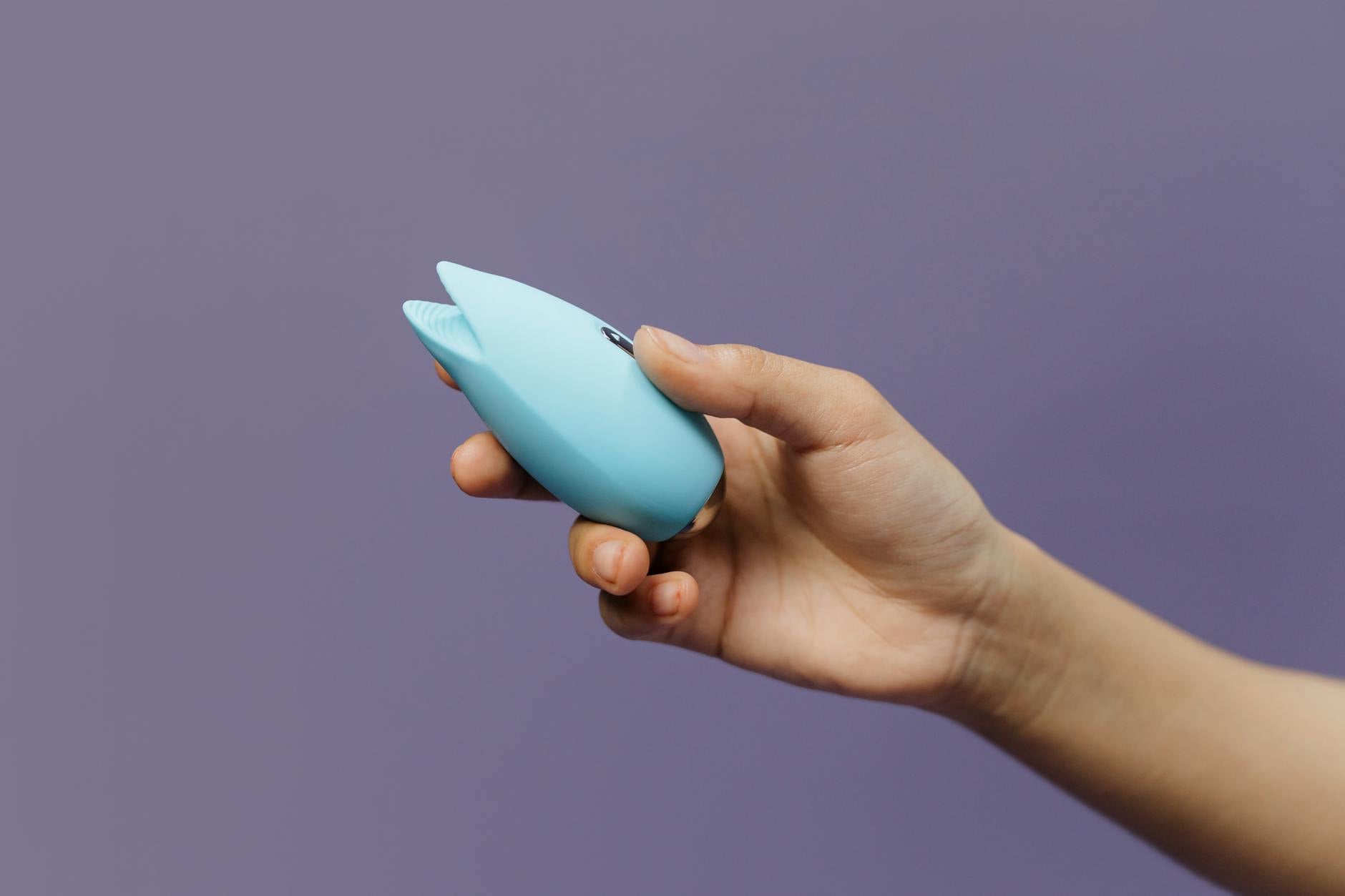
First, you've got a tool that responds to your body, not to someone else's mood or timing. The Lem, for example, works on suction stimulation. That means you control the intensity. You control the rhythm. You can spend 5 minutes at setting 1, then jump to setting 4, then back to 2. You're never waiting for your partner to catch up or rushing to finish before they lose interest. The lemon sucker responds to your body's actual needs, which means your nervous system can actually relax into pleasure instead of bracing for performance.
Second, and this is huge: your partner gets to stay involved without the pressure of being your entire pleasure engine.
Most couples treat lemon clitoral vibrators as either a solo thing or a replacement for partnered sex. Neither is true. A lemon vibrator is an and, not an or. Your partner can be inside you, or kissing you, or watching, or touching somewhere else. You're using the vibrator for the specific stimulation that gets you there, on your timeline, while they're still very much present and connected. That's a completely different dynamic than "I have to wait for you to finish." Now it's "I get to be right here with you while you take what you need."
How to actually bring this up without it being awkward
Honestly? Frame it as something for both of you, because it is.
Try this: "I've been thinking about how different our bodies are, and I don't want either of us to feel rushed. I want us to spend time together without the pressure of timing. I'm thinking about trying a lemon vibrator so I can focus on what actually feels good instead of watching the clock. Would that feel okay to you?"
You're not saying he's too fast. You're not saying there's a problem. You're saying you want more pleasure, and you want him to be part of that. Most partners hear that as a yes, not a criticism.
If he pushes back, that's information too. It might mean he has some insecurity about not being enough. That's a different conversation, and it's worth having. But if he says yes, you've just solved a huge chunk of the pressure.
What the research actually says
A 2020 study in the Journal of Sexual Medicine found that 43% of women reported feeling pressured to orgasm during partnered sex. Of those, the ones who used vibrators reported significantly lower performance anxiety and higher pleasure ratings. Not because vibrators are magic, but because they removed the dependency on timing matching.
Here's the kicker: partners reported feeling more connected when vibrators were involved, not less. Why? Because the person with the vulva wasn't faking or performing anymore. They were actually present. They weren't split between their body and their brain trying to solve a math problem.
The specific moves that work
If you're new to using a lemon clitoral vibrator with a partner, start with these:
1. Start with solo time first. Spend a few sessions alone understanding how the vibrator feels on your body at different settings. Get comfortable with it. Then bring it into partnered time. You'll feel way less self-conscious if you already know what you like.
2. Don't wait until the last second. Start using the vibrator early in sexual time, not as a last-minute hail mary. That way it's just part of the experience, not a sign that something isn't working.
3. Let your partner see it working. The more visible you are with pleasure, the less it becomes this mysterious thing. You're not hiding. You're sharing what actually gets you there.
4. Use it even if you think you might orgasm naturally. This removes the pressure of proving you can come without it. You're taking the stakes off the table completely.
A lemon vibrator isn't a crutch. It's an equalizer. It's a way of saying your timeline matters just as much as theirs.
When this actually solves the bigger problem
Here's the thing I see with couples who've been stuck in this cycle for a while: the timeline mismatch was never really the problem. It was a symptom.
The real problem was that one person was performing and one person wasn't paying attention. And when you bring in a tool that makes performance impossible, suddenly you both have to actually show up for pleasure as it actually is. Not as you think it should be. Not on the schedule you planned.
Sometimes that heals the relationship faster than anything else. Because you're both getting what you actually wanted: to be close to someone while they experience real pleasure, not a polite facsimile of it.
How Lemon Vibrators Help When You Want Pleasure With a Partner But Worry About Timing covers more of the worry piece if this resonates. And if communication itself feels impossible, How Lemon Vibrators Help When Talking About Pleasure Feels Too Vulnerable walks through the words.
The FAQ section
Does using a lemon vibrator during sex mean my partner isn't enough?
No. Genuinely. A vibrator isn't a replacement partner. It's a tool. Your hands aren't enough to lift a heavy box, but that doesn't mean your hands are broken. You just add a tool for the job. Same thing. Your partner is still you, still connecting with you, still present. The vibrator just handles one specific thing your body needs.
Will my partner feel less needed if I use a vibrator?
Maybe, if you frame it wrong. But here's the reframe: you need him there. You need his body, his attention, his presence. You just also need the specific kind of stimulation that gets you to orgasm. Those are two different things. Most secure partners actually feel relieved to know exactly how to help instead of guessing.
How do I bring a lemon vibrator into sex if we've never used toys before?
Start by mentioning it when you're not in bed. "I've been reading about how a lemon clitoral vibrator could help us both enjoy sex more, and I'm curious to try it. Would you be open to that?" That's it. No performance, no urgency. Just a question. If he says yes, order one, and use it solo first so you're not learning it for the first time during partnered sex.
What if my partner is uncomfortable with the idea?
Ask why. Is it insecurity? Is it discomfort with sex toys in general? Is it worry about cost? Those are all different conversations. A lemon vibrator isn't a threat to your relationship unless someone decides it is. Usually discomfort softens once the person understands it's for everyone's pleasure, not a replacement.
Can I use a lemon sucker if we're also having penetrative sex?
Absolutely. That's actually one of the best setups. You get internal and external stimulation at the same time, which most people need to reach orgasm. It also takes the pressure off penetration being the entire experience. Penetration is one thing, the vibrator is another, and you get both at your own pace.
What if I still don't orgasm even with the vibrator?
Then at least you've removed one variable. You now know it's not a timing problem or a partner problem or a tool problem. It might be medication, stress, hormones, or just how your body works that day. And honestly? That's okay. Pleasure doesn't require an orgasm at the finish line. But if this is a pattern, talking to a doctor makes sense.
The actual point
Your timeline is valid. Your pleasure matters as much as your partner's. And you don't have to sacrifice one for the other. Lemon clitoral vibrators aren't about speed. They're about freedom. Freedom to feel what you feel without performing. Freedom to take what you need. Freedom to stay connected to your partner while staying true to your body.
That's not a compromise. That's the whole thing working.