Let's talk about the gap
Honestly, there's no shame in it. Life happens. Relationships end, work swallows everything, kids arrive, health stuff derails your rhythm, or you just... stop. Then months pass. Years sometimes. And at some point you think, "I used to enjoy this. I want to remember what that felt like." That's not nostalgia talking. That's legitimate self-care trying to surface.
The tricky part isn't wanting to come back to solo pleasure. It's the fact that your body might feel like a stranger's now. Your preferences might have shifted. Your arousal pattern probably changed. And there's often a weird mental hump to get over, like you need permission to prioritize yourself in this way. You do. Here's that permission, freely given.
The reentry problem nobody talks about
When you step back into self-pleasure after a long break, three things are usually happening at once. First, your body's sensation map has probably evolved. Nerve endings don't forget, but the way they respond to stimulation can shift. Second, your mind is doing this thing where it's curious but also slightly skeptical, like "will this even work anymore?" That mental noise is real and it matters. Third, if you've been touching yourself the same way for years (or decades), your nerve endings have become accustomed to a specific kind of pressure or rhythm. Changing that up actually rewakes the pleasure response.
Traditional vibrators often feel too intense for someone easing back in. They're fast, they buzz at a single frequency, and they can feel jarring when you're relearning your own body. The sensation can feel almost aggressive if you're rusty or if your sensitivity has changed.
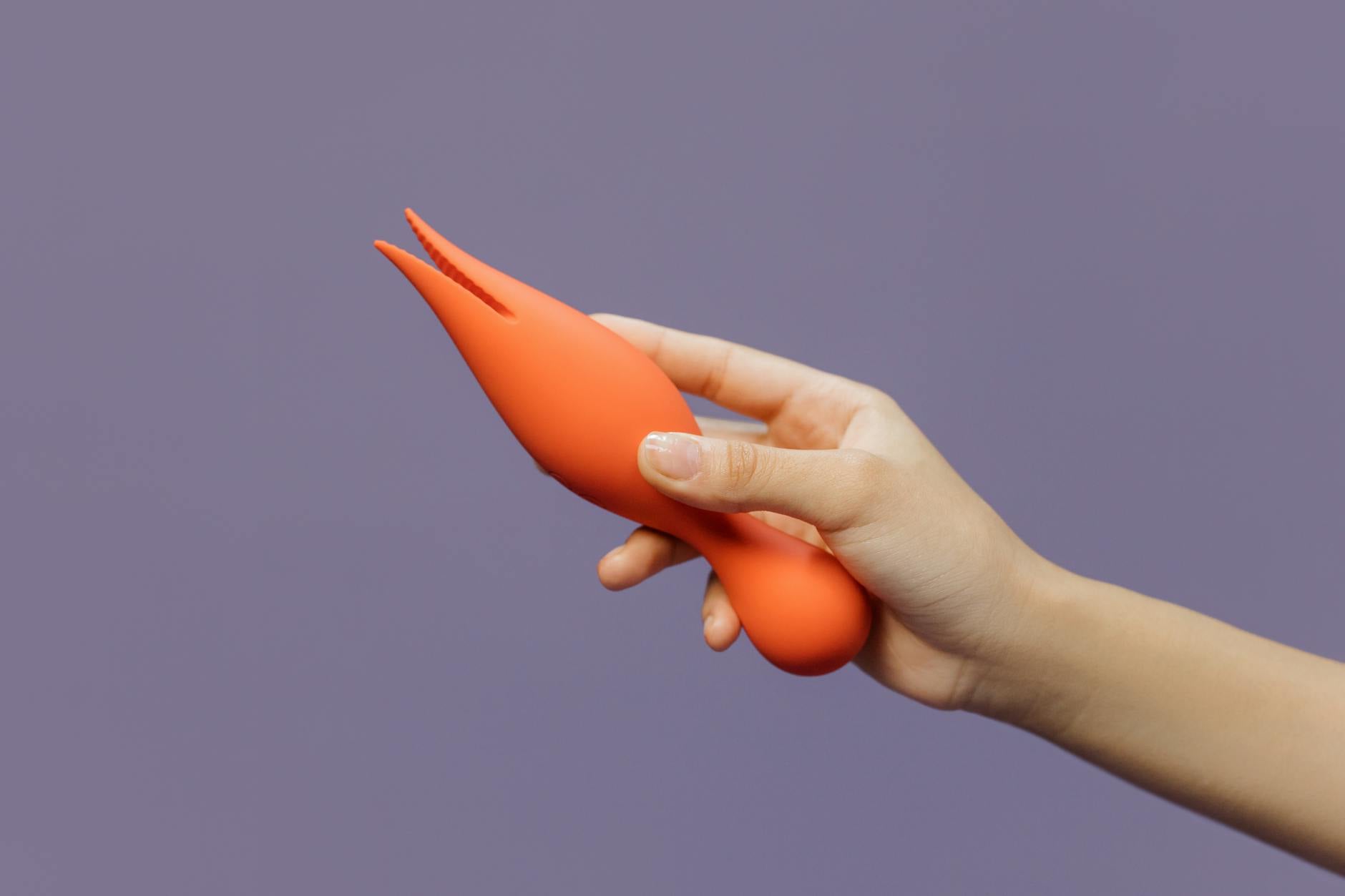
Lemon clitoral vibrators work differently. They use suction and pulsing rather than straight vibration, which means the stimulation feels more like a wave than a buzz. Your tissue responds to pressure and release, not raw frequency. For someone coming back to pleasure, that distinction is everything.
Why the lemon sucker approach actually helps
Let's break down what happens when you use a lemon vibrator. The suction creates a gentle seal around the clitoral area. As the device pulses, it's essentially massaging your tissue with pressure that builds and releases. This mimics the kind of stimulation your body naturally responds to, which is why many people find their first orgasm on a lemon clitoral vibrator feels surprisingly easy, even after years away.
You're not forcing sensation. You're inviting it. The rhythm patterns on Hello Nancsy's lemon vibrators let you start at the gentlest setting and slowly build. You can sit with a low pulse for as long as you need. No rush. No performance. Just your body remembering what pleasure feels like.
The physical reawakening is one thing. But the mental shift is equally important. When you use a device that feels intuitive, you stop overthinking. Your nervous system relaxes. Arousal actually needs that relaxation to build, so you're essentially removing the barrier that was keeping you stuck.
Three concrete ways lemon vibrators ease the transition
1. They don't require a learning curve. With traditional vibrators, you spend the first session figuring out angle, pressure, how long to hold it. With a lemon vibrator, you position it and let the pulsing do the work. That simplicity matters when you're already feeling vulnerable about starting again.
2. The suction sensation is forgiving. If your sensitivity is higher than it used to be, suction won't feel overwhelming the way a high-frequency vibrator can. If your sensitivity is lower, the rhythmic pressure actually stimulates dormant nerve endings. You get the benefit either way.
3. Pacing is built in. You're not managing vibration strength. You're experiencing a rhythm that's been engineered to feel good. Pattern 1 on a lemon vibrator is genuinely pleasurable on its own. You don't feel like you're "failing" if you don't jump straight to the highest setting.
What the research actually says
Studies on clitoral suction devices show that they produce orgasms with measurably higher intensity and faster time-to-orgasm than traditional vibrators, particularly for people returning to masturbation after a break or experiencing any kind of arousal delay. The suction mechanism activates a broader area of tissue, engaging more of the pleasure network in your pelvis. For someone who's been away, that means faster confidence and fewer sessions where you're wondering if your body still works that way.
There's also the psychological piece. When your first few sessions back are successful, you rebuild your sense of sexual agency. You remember: "Oh, I actually know how to do this. My body still works. This still matters." That's not small.
Setting realistic expectations (they're actually pretty good)
You might not have an orgasm your first time. That's okay. Pleasure is the point, not the orgasm. If you sit with a lemon vibrator for ten minutes and experience anything that feels good, that's a win. Your arousal pathway is like a muscle. It needs a few sessions to warm up.
Second session? Often easier. Third session? You'll probably start noticing that familiar spark. By session five or six, many people find their rhythm again. Some find it's actually better than before because you're not performing. You're just... experiencing.
Also, don't compare yourself to porn logic or to your younger self's response time. Your body now is different. Different doesn't mean broken. Often it means more knowing. You might orgasm slower now, or the orgasm might feel different, or you might prefer a kind of pleasure that's not orgasm-focused at all. All of that is valid.
The practical setup that actually helps
Here's what I tell people: Set aside 20 minutes when you won't be interrupted. Not because you need that long, but because the lack of time pressure actually matters neurologically. Your nervous system needs to know it's safe to relax.
Low lighting helps. Not candles and rose petals unless that genuinely appeals to you. Just dimness. It cues your brain that this is private time.
Use a water-based lubricant, even if you think you don't need it. After a long break, extra glide makes everything feel smoother and more intuitive. Your tissue will thank you.
Start with pattern 1 or 2. Seriously. You don't need the strongest setting. You need to remember what pleasure feels like at a gentle register.
When to push forward and when to pause
If something hurts, stop. Pressure is good. Pain is a signal. If a session feels frustrating, that's normal. Frustration in the first three to five sessions is part of the relearning process. If it's still frustrating after ten sessions, something might actually be off physiologically and a gynecologist is worth consulting.
If you're not reaching orgasm after six or seven sessions, that doesn't mean it won't happen. Some people need more time. Antidepressants, hormonal birth control, stress, and aging all affect arousal. A lemon clitoral vibrator helps, but it's not magic. If you're also dealing with one of those factors, go easy on yourself.
Most importantly, recognize that returning to self-pleasure after a long absence is genuinely different from regular masturbation. Your body and mind both need grace and patience. You're not broken. You're just... re-establishing a conversation with yourself. A conversation you deserve to have.
People also ask
How long does it usually take to reach an orgasm after you've been away for years?
It varies wildly. Some people orgasm on their second or third session. Others need three weeks of regular practice. The average is probably one to two weeks of consistent sessions, maybe two to four times weekly. Your body isn't "rusty" in the way that implies permanent damage. It's more like a pathway that needs a little traffic to light back up. Stress, relationship status, sleep quality, and general health all matter as much as how long you've been away.
Can lemon vibrators feel too intense when you're starting again?
Not really, because you can start at the lowest pattern. That's the point. Pattern 1 on a lemon clitoral vibrator is usually in the gentlest range of any sex toy. If even that feels like too much, it usually signals either dehydration (hydrate, wait a day, try again), tension in your pelvic floor (which a therapist can help with), or an underlying sensitivity issue worth discussing with a gynecologist. But the device itself won't force you past your comfort zone.
Is it normal to feel awkward or embarrassed when you start again?
Completely. You might feel weird. You might feel like you're being self-indulgent. You might feel like you "should" be doing something more productive. That's your brain's defense mechanism against pleasure, and it's incredibly common. The awkwardness usually passes after two or three sessions once your brain realizes that pleasure is actually fine, actually good, actually part of self-care. Some people journal through it. Some people just push past it. Whatever helps you move through that discomfort is worth doing.
What if you're in a relationship? Does solo pleasure affect your partnered sex?
It often improves it. When you know your own body, you're better at communicating what you like. You're not putting all the pressure on your partner to figure you out. You're also more confident, which translates to better intimacy. That said, if you're worried about how a partner might react, that's worth a conversation. Many couples find that solo pleasure actually strengthens their sex life because there's less pressure and more knowledge flowing both directions.
Can you use a lemon vibrator if you have endometriosis, vulvodynia, or other conditions?
Maybe. Chronic pain conditions require individual assessment. Some people with vulvodynia find that suction-based stimulation feels better than vibration. Some find it's too much. Start with the gentlest setting and pay attention to your body's feedback. If there's pain (not pressure, actual pain), stop and consult your gynecologist or a pelvic physical therapist. They can give you specific guidance on what's safe for your condition.
Is there a "right" way to use a lemon vibrator when you're coming back to solo pleasure?
Nope. There's a way that works for your body. Some people like direct clitoral contact. Some prefer stimulation around the clitoris. Some like the vibrator positioned off to one side. Some want internal stimulation alongside it. You get to figure that out by experimenting. That exploration is part of the pleasure, not a bug. Trust your own intuition.
The real permission slip
You don't need a reason to explore your own pleasure. You don't need to wait for a partner. You don't need to feel bad about the time away. Your body is not keeping score. It's not damaged. It's just waiting for you to show up.
Using a lemon clitoral vibrator when you're returning to self-pleasure after time away is the kindest possible reentry. It's simple. It works with your body instead of against it. It doesn't demand anything except your willingness to spend a little time alone with yourself.
If you're ready to come back, start there. Your nervous system will thank you.
References
Breuner, G., & Eardley, I. (2010). "Female sexual dysfunction." Reviews in Urology, 12(2-3), 112-120.
Herbenick, D., et al. (2016). "Prevalence and characteristics of vibrator use by women in the United States." Journal of Sexual Medicine, 6(7), 1857-1866.
Meston, C. M., & Frohlich, P. F. (2000). "The neurobiology of sexual function." Archives of General Psychiatry, 57(11), 1012-1030.