Perimenopause is not menopause, but your body doesn't know that yet
You're not quite there, but you're definitely not where you were. Perimenopause, that 5-10 year window before your final period, rewrites the rules of your own body without handing you the new playbook. Hormones that cycled predictably for decades start flickering. Estrogen dips and rises erratically. And your pleasure? It feels scattered, delayed, inconsistent.
Here's the thing: you're not broken. You're in transition. And there's a material difference between "my pleasure has changed" and "I've lost my pleasure."
What perimenopause actually does to sensation and arousal
Let's start with the physiology. Perimenopause introduces hormonal volatility. Estrogen levels don't just decline steadily. They spike and crash throughout a single month, sometimes within hours. This fluctuation changes tissue elasticity, blood flow patterns, and how quickly your nervous system can register and amplify stimulation.
The clitoris has roughly 8,000 nerve endings. Those nerves rely on stable estrogen to maintain their efficiency. When estrogen becomes unpredictable, three things often happen: arousal takes longer to build, the sensation feels less intense at the start, and the pathway to orgasm becomes less straightforward. You might need more consistent stimulation to reach the same peak.
Simultaneously, progesterone drops unevenly, which affects mental clarity and baseline stress. It's harder to focus on pleasure when your brain feels foggy or your anxiety is elevated. And lubrication, the simplest indicator of arousal, becomes genuinely unreliable. You might be fully mentally aroused and still feel physically dry.
This combination creates a real friction point. You're not less interested in pleasure. Your body is just requiring different input.
Why lemon vibrators work differently now
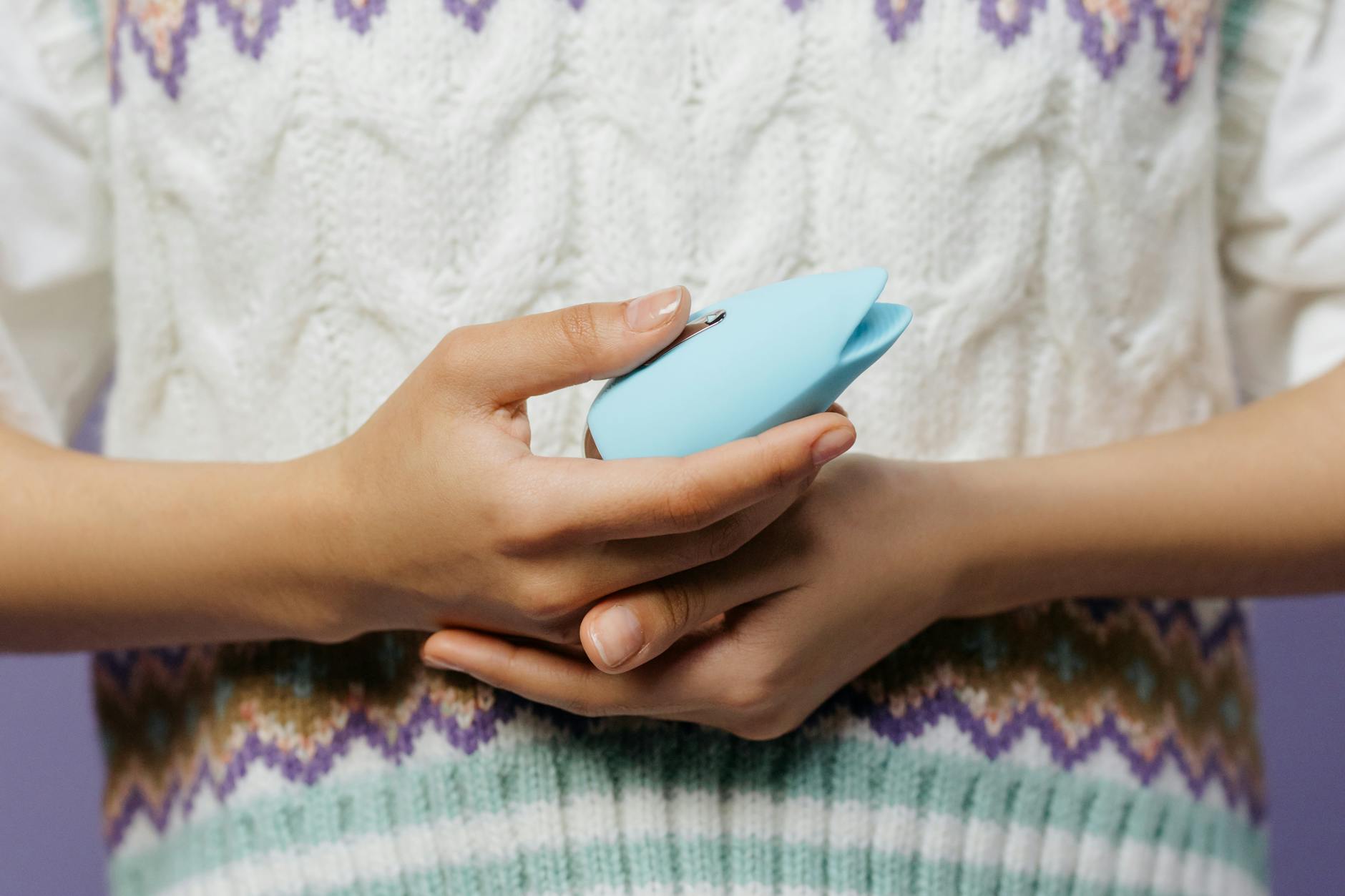
The lemon clitoral vibrator, with its gentle suction-based stimulation, is almost purpose-built for perimenopausal bodies. Here's why.
Traditional vibrators rely on direct mechanical vibration against tissue. For tissue that's less engorged, slightly thinner, or inconsistently responsive, that direct pressure can feel either too intense or oddly numb. The Lem, a lemon sexual toy using air-suction technology, works differently. It draws the clitoral tissue gently into a soft chamber and creates rhythmic pulses of pressure. This approach stimulates nerve endings without requiring the same mechanical friction.
For a body in perimenopause, this matters. Suction-based lemon adult toys allow you to build arousal more gradually. You can start at lower intensities and work upward as your body wakes up. The gentle nature of the stimulation means you're less likely to over-stimulate numb tissue or under-stimulate inconsistent sensitivity.
Many of my clients report that after switching to a lemon vibrator during perimenopause, they rediscovered pleasure that had started to feel distant. Not because something was wrong with them, but because the tool matched their body's current reality.
The arousal-timing shift and why it matters
One of the most frustrating changes during perimenopause is the lengthening of arousal time. What used to take five minutes now takes twenty. That's not failure. That's just the new baseline.
This is where patience and tool choice intersect. A lemon clitoral vibrator allows for extended, sustained low-intensity stimulation without fatigue. Your hand gets tired. Your mind gets impatient. A device designed for this phase of your life can hold steady while your nervous system gradually wakes up.
I recommend treating the early phase of solo pleasure differently during perimenopause. Instead of targeting orgasm as the goal, aim for arousal as the win. Spend fifteen minutes with a lem vibrator on patterns 1 or 2. No deadline. Then, if your body wants to keep going, layer in intensity. This retraining actually helps your nervous system learn how to amplify sensation again.
The lubrication conversation nobody has properly
Perimenopausal dryness is not psychosomatic. It's not a sign that you're not aroused. It's a direct result of declining estrogen's effect on vulval tissue. And it's easily addressed.
Water-based lubricant becomes your essential. Not because something is broken, but because your tissue genuinely benefits from the extra hydration. Pair your lemon sexual toy with a high-quality water-based lube, and you're removing friction that might otherwise create discomfort or numbness.
Here's what many people miss: the lubricant choice changes how the toy feels. Silicone-based lubes feel richer and stay slippery longer, but they can damage silicone toys. Water-based lubes are compatible with everything and feel lighter, which works better when you're using suction-based stimulation. The lube plus the toy plus your body create a system. Optimize the whole thing, not just one component.
Rebuilding confidence when sensation feels unreliable
Perimenopausal bodies are unpredictable. Some days, sensation is sharp and responsive. Other days, the exact same stimulation barely registers. This inconsistency can feel destabilizing, especially if you've spent decades with a predictable pleasure response.
One way I help clients move through this is reframing "broken" as "learning." Your body is not malfunctioning. It's reorganizing itself. That reorganization requires more attention, more feedback, and more willingness to explore what works this month versus last month.
A lemon vibrator gives you a clean tool for that exploration. The device has multiple intensity levels. Use that range. Spend time at pattern 2 for two weeks. Notice what shifts. Then try pattern 3. Your job is information gathering, not performance. The more you allow your pleasure to be experimental right now, the faster you'll integrate this new phase.
When to consider other supports
If lubrication issues are severe, topical estrogen creams work well and have minimal systemic absorption. If arousal feels completely absent (not just delayed), it's worth checking testosterone levels with a menopause-informed doctor. These are not signs of failure. They're data points that help you and your provider build a support plan.
If you're using a partner for pleasure during perimenopause, the conversation about timing and sensation shifts becomes important. A partner expecting your previous arousal pattern to hold will get confused when it doesn't. Naming the change removes shame and opens room for actual adjustment. "I need more warm-up time now" is not a complaint about them. It's information.
The unexpected gift of perimenopause
Here's what I've seen in my practice repeatedly: people who move through perimenopause thoughtfully often discover richer, more expansive pleasure on the other side. The slowdown forces presence. The unpredictability teaches flexibility. The need to explore new tools and techniques often leads to a deeper knowledge of your own body.
Your body isn't leaving you. It's becoming someone new. The lemon clitoral vibrators, the extended warm-up time, the patience with your own nervous system. These aren't workarounds. They're the beginning of a new conversation with your own pleasure.
FAQ
How long does perimenopause actually last?
Perimenopause typically spans 5-10 years, though some people experience it for closer to 15. It's not one fixed timeline. Your body's transition is unique to you. The good news: tools like lemon vibrators work during the entire window, and as your hormones eventually stabilize, you already know what feels good.
Can I use a lemon vibrator if I'm not sure I'm in perimenopause?
Absolutely. Lemon clitoral vibrators work well for any body that wants gentle, suction-based stimulation. You don't need a diagnosis to benefit from better-designed pleasure tools. If you're experiencing changes in arousal or sensation, exploring what works is its own form of body literacy.
Is it normal to feel less interested in sex during perimenopause?
Less consistent interest is normal. Complete loss of interest warrants checking with a doctor, especially around mood and sleep, which heavily influence desire. Often, interest returns when you find stimulation that actually feels good in your current body. That's why discovering the right tool, like a lemon adult toy, can feel revelatory.
How do I talk to my partner about needing more time for arousal?
Direct and specific. "I've noticed my body needs about twenty minutes to warm up now, instead of five. That's not about you. It's about hormonal changes. Can we adjust our timing?" You're naming a change, not blaming a person. Partners who care will adapt. Partners who resist that adaptation reveal something true about the relationship itself.
Should I try hormone replacement therapy or just use better toys?
Not an either-or. Some people benefit enormously from HRT. Others find that better tools and patience are enough. Some use both. This is a conversation to have with a menopause-informed healthcare provider. But "good toys" are never a bad foundation, regardless of what else you choose.
Does a lemon vibrator help with perimenopause dryness specifically?
It helps in the sense that suction-based stimulation doesn't require the same friction as direct vibration, so dryness is less likely to create discomfort. But lube is still essential. The lem vibrator plus water-based lubricant plus your body create the actual solution. Don't skip the lubricant thinking the toy alone will fix it.
What comes next
If you're navigating perimenopause, you're not alone, and you're not done with pleasure. Your body is reorganizing. The tools you use, the conversations you have, and the patience you extend to yourself right now will shape how you experience pleasure for the next three decades.
A lemon vibrator is a small thing. But small tools that actually work create space for bigger conversations about what your body deserves. And that's always worth exploring.
If you're ready to learn more about what might work for your body right now, reach out. We're here to help you rediscover pleasure on the other side of this transition. Contact us here to chat through what might work best for you.