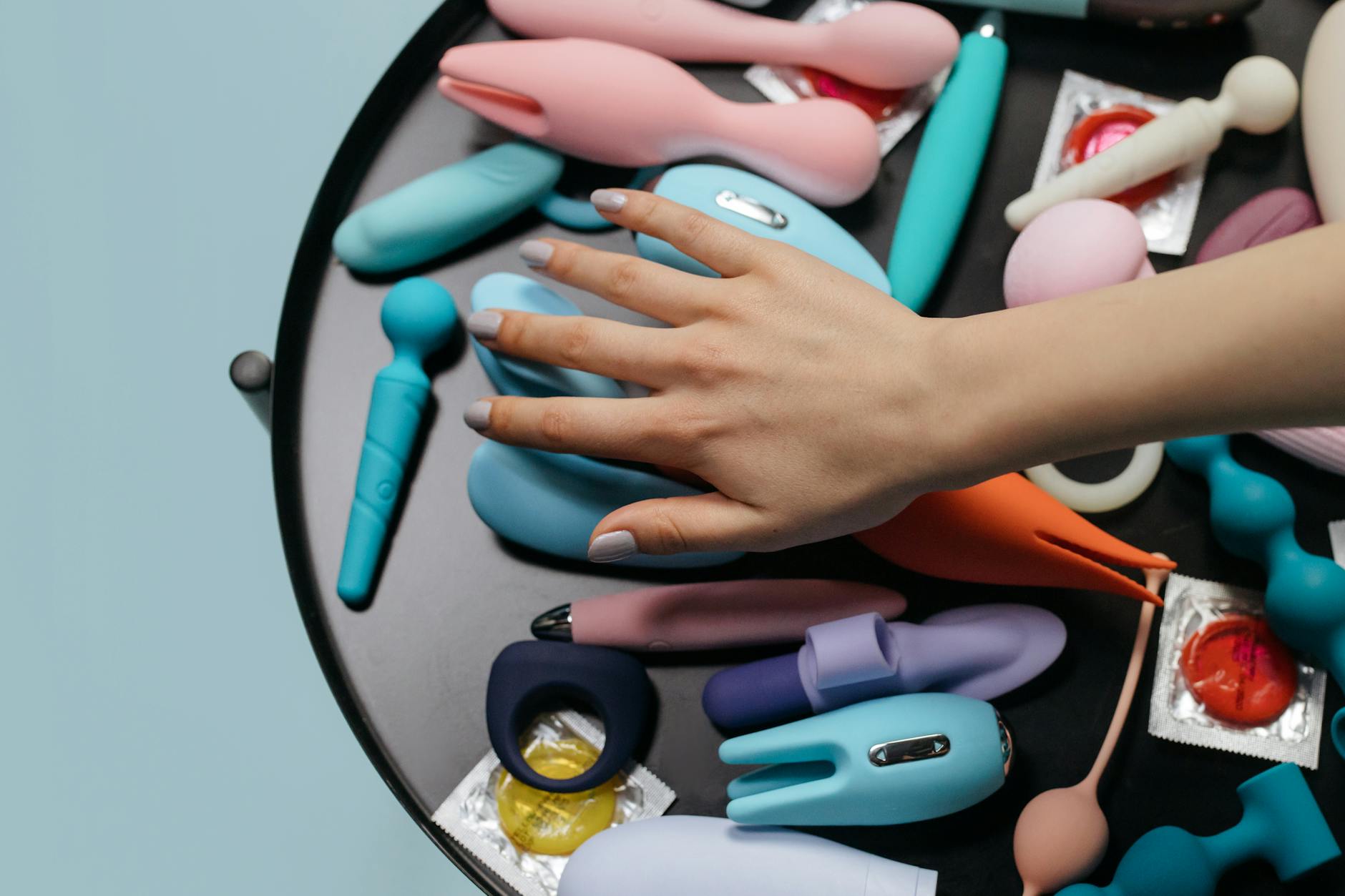
The thing nobody tells you about antidepressants and sex
Antidepressants work. They genuinely do. They pull you out of the hole. They let you function, feel less alone, show up for the people you love. And then, quietly, they flatten something else. Desire. Sensation. The ability to orgasm, or the time it takes to get there, stretches into something that feels impossible.
Here's what makes this particular frustration so lonely: it's a side effect that almost nobody talks about openly. Your doctor might mention it. You might nod, think it's a small price, and then six months later you're lying there wondering if you'll ever feel pleasure the way you used to. The answer is yes. You will. But not if you're waiting for it to happen on its own.
What SSRIs actually do to your nervous system
Antidepressants, especially SSRIs, work by increasing serotonin. That's the chemistry that lifts mood, reduces anxiety, and helps you sleep. But serotonin does something else too: it dampens the arousal response.
Here's the chain reaction. Sexual arousal depends on a delicate balance between your sympathetic nervous system (the accelerator) and your parasympathetic nervous system (the brake). Serotonin strengthens the brake. That's useful when you're spiraling with anxiety. It's less useful when you're trying to feel turned on.
This doesn't mean you can't feel pleasure. Your nerve endings are still there. Your clitoris is still there. But the signal from your brain to your body gets a bit muffled. Arousal takes longer to build. The intensity might feel softer, or require more direct stimulation. Orgasms might take longer, or feel less intense, or both.
The timing matters too. Some people notice the shift within days of starting an SSRI. For others it takes weeks. And honestly, for some people on lower doses, it barely registers. There's no way to predict which camp you'll land in until you're already there.
Why lemon vibrators change the game
This is where lemon clitoral vibrators, and the lemon suction technology specifically, becomes relevant. A traditional vibrator works through vibration alone. It sends waves of sensation directly to the tissue. But when your nervous system is already dampened by serotonin, you're asking that vibration to travel through a muffled signal.
Lemon vibrators use a different mechanism. The Lem, for example, uses air-pulse suction. Instead of vibration, it creates a gentle seal and releases micro-bursts of air that stimulate the clitoris indirectly. This feels less like buzzing and more like a rhythmic pressure and release. The difference sounds small. The experience is completely different.
Why this matters on antidepressants: suction stimulation bypasses some of that neurological dampening. It engages more of the surrounding nerve tissue, and the sensation pattern itself is novel enough that your brain processes it differently than a standard vibrator. Many people find that when vibration alone isn't cutting through the serotonin fog, suction does.
The specific ways antidepressants change your pleasure response
There are four main patterns I see in people navigating this. You might experience all of them, or just one.
Delayed arousal. You're not broken. Your body just needs more warm-up time. Where you used to feel ready in five minutes, now it's 20. This is normal, and it's not permanent. Some people find that once they're in the room with the lemon clitoral vibrator and focus on the sensation rather than the clock, the delay becomes less noticeable.
Flattened intensity. Orgasms feel muted. Not absent, but distant. Like you're experiencing pleasure through a pane of glass. This is the serotonin brake at work. It's also the place where lemon vibrators shine, because the novelty of suction sensation can sometimes punch through that flatness.
Difficulty with rhythm. Some people find that the mental load of trying to coordinate breathing, movement, and stimulation becomes harder on SSRIs. The executive function piece tires you out. In this case, something like the Lem that does one thing consistently and well can actually reduce cognitive load.
Pleasure anxiety. This one isn't the drug's fault. It's the catastrophizing that happens when you notice the first three things. "Will this ever come back? Am I broken? Is my partner going to leave?" The anxiety then makes arousal harder. A feedback loop. Using a lemon vibrator solo, without the pressure of a partner watching or waiting, can break that loop.
Practical moves that actually help
First: talk to your doctor. There are alternatives. Sertraline and paroxetine tend to have higher rates of sexual side effects than escitalopram or bupropion. A dose adjustment might help. Or switching to something like Wellbutrin, which actually increases dopamine, could be a game-changer. None of this means stopping your medication. It means optimizing it.
Second: give yourself permission to need different tools. If you used to come easily with minimal stimulation, and now you need a lemon sucker or a lemon clitoral vibrator, that's not a regression. That's adaptation. Your nervous system has shifted. The tool adapts with it.
Third: timing. Most SSRIs peak in your system at a particular time of day. Some people find that their sexual response is slightly better in the early morning, before the day's dose has fully kicked in. Others find that waiting until right before bed, when they're about to rest anyway, removes the performance pressure.
Fourth: patience with novelty. The Lem works differently than what you're used to. It might feel weird at first. Give it three or four uses before deciding it's not your thing. Your nervous system needs time to register that this new sensation is safe and pleasurable.
When to get professional support
If you've been on the same antidepressant at the same dose for six months and pleasure is still completely inaccessible, don't just accept it. Talk to your psychiatrist. Sexual dysfunction is a real side effect, and it's treated. Sometimes a small dose of Buspar can help. Sometimes switching classes of antidepressants is the move.
If the flatness is making you feel disconnected from your partner, couples therapy or sex therapy can help you both navigate the adjustment. This isn't something you have to white-knuckle through alone. You're also not alone in experiencing it. How to Use Lemon Vibrators When Anxiety Gets in the Way of Pleasure covers some of the emotional side of this too.
The bigger picture
Honestly though, here's the thing. Antidepressants gave you your life back. They did their job. The sexual side effects are real, and they matter, and they're worth addressing. But they're not a reason to stop taking something that's keeping you stable. The answer is not "accept a flattened sexuality." It's "use different tools." That might be a lemon vibrator. It might be a dose adjustment. It might be both.
The people I work with who manage this best are the ones who stop seeing the sexual side effects as a personal failure and start seeing them as a technical problem with a technical solution. Your pleasure matters. Your mental health matters. You don't have to choose.
People also ask
Does using a lemon vibrator help if I'm on Zoloft?
Sertraline (Zoloft) is one of the antidepressants most commonly associated with sexual side effects. Lemon clitoral vibrators, particularly ones using suction technology like the Lem, can help bridge the gap because the stimulation pattern is different from what your dampened nervous system has already adapted to. The direct sensation from suction sometimes breaks through the fog better than vibration alone. That said, a conversation with your psychiatrist about dose adjustment or switching is worth having too.
Can switching to a different SSRI actually make a difference for pleasure?
Yes, meaningfully. Bupropion and escitalopram tend to have lower rates of sexual side effects than paroxetine and sertraline. Some people experience a noticeable difference within weeks of switching. But switching isn't always straightforward, especially if you've been stable on your current medication. Work with your doctor on this one.
Is it normal for orgasms to feel different on antidepressants?
Completely normal. Your serotonin levels have shifted, and that changes how your nervous system processes sensation and pleasure. You're not broken. Your body is adapting to the medication. For many people, this settles after a few months as they adjust. For others, it persists and requires tools or interventions. Both are okay.
Will a lemon sexual toy help if I can't orgasm at all on my SSRI?
Maybe. The novelty of suction stimulation helps some people reconnect with sensation when vibration alone isn't working. But if orgasm is completely absent, that usually points to a bigger dose or medication issue that deserves a real conversation with your doctor. A lemon vibrator can be part of the solution, but it's not a replacement for medical adjustment.
How long does it take to feel a difference with a lemon suction vibrator if I'm on antidepressants?
It varies. Some people notice a difference in the first use, especially if they've never experienced suction stimulation before. For others, it takes three to five sessions for their nervous system to register the new sensation pattern as pleasurable. Give yourself at least a few sessions before deciding if it's working for you.
Can I use a lemon clitoral vibrator while my partner watches or participates?
Yes. Many people actually find this easier than trying to orgasm through penetration alone when they're on antidepressants. The external, direct stimulation from a lemon vibrator is often more effective than internal movement. If you're curious about using lemon vibrators with a partner, that's worth exploring, especially if the pressure to perform is part of your anxiety loop.
Do I need to tell my partner I'm using a lemon vibrator because of my medication?
That's entirely up to you. Some people find that explaining "My antidepressant changes how my body responds, so I need something different now" opens a conversation and removes shame. Others just use it privately. Neither is wrong. But if you're using it together, honesty usually helps. It reframes it from "something's wrong with me" to "here's what works for my body right now."