
The flatline nobody talks about
Long-term relationships often hit a wall where desire just...stops. Not because you stopped loving your partner. Not because anything went catastrophically wrong. It's subtler than that. You fall into rhythm, sex becomes predictable, and somewhere around year five or seven (or three, or fifteen—it varies), you realize neither of you is reaching for the other anymore.
Honestly? This is one of the most common problems I see in my practice, and it's also one of the most fixable.
Here's what I want you to know first: rebuilding desire isn't about trying harder or scheduled sex or "date nights" alone. It's about rediscovering your own pleasure first, which sounds selfish until you realize it's actually the foundation for reconnecting with your partner.
Why solo pleasure matters more than you think
When desire has been dormant for a while, many couples make the same mistake. They assume they need to fix it together. They try a new position. They book a hotel room. And nothing happens because the real problem is internal, not relational.
Your nervous system has learned that sex is obligation. Your brain has filed it under "things we schedule" instead of "things we want." Your body has stopped signaling desire because there's been no signal to respond to.
Reintroducing pleasure to yourself rewires that entire system. When you use a lemon clitoral vibrator solo, you're not being unfaithful. You're recalibrating. You're reminding your body what anticipation feels like. You're teaching your nervous system that pleasure is possible again.
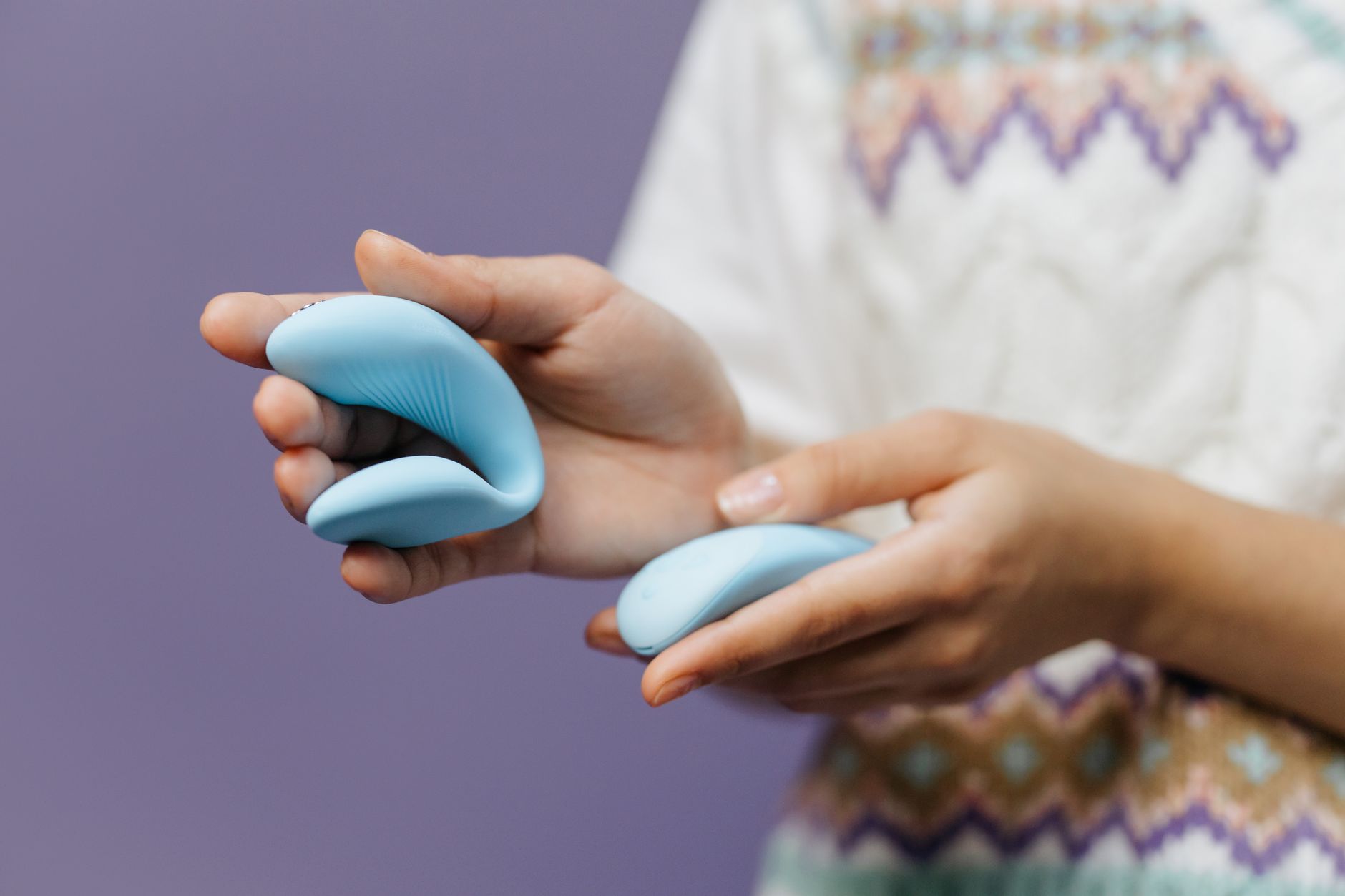
Photo by cottonbro studio on Pexels
Then, when you and your partner eventually reconnect, there's actual electricity in the room because you remember what it feels like.
Why lemon vibrators specifically help with stagnation
A lemon sexual toy works differently than a traditional vibrator, and that difference matters when desire has been flat for a long time.
Traditional vibrators demand constant pressure. You have to hold them exactly right, keep the angle precise, maintain focus. When your desire system is already exhausted, that feels like another chore.
Lemon clitoral vibrators use suction and pulsing patterns. The sensation is novel. It hits nerve clusters differently than anything you've probably experienced in your current relationship. That newness alone can interrupt the "this is boring" loop your brain has settled into.
More importantly, a lemon vibrator demands less active effort from you. You can relax into it instead of performing for it. That shift from performance to presence is often where desire actually starts to rebuild.
The solo exploration phase (weeks 1-3)
Start here. Not with your partner. Not with pressure. Just you.
What to do: Set aside 20-30 minutes when you won't be interrupted. No phone, no partner in the house. Use a water-based lubricant. Explore the different patterns on your lemon clitoral vibrator starting at low intensity. Don't goal-seek toward orgasm. The point is sensation, not outcome.
What will probably happen: The first time, you might feel awkward. That's normal and temporary. Your body needs a minute to remember that pleasure isn't threatening. By session two or three, something shifts.
What to track: Notice what patterns feel good. Notice the timing. Notice if your desire starts to build outside these sessions, even tiny amounts. That's the rewiring working.
This phase is crucial because it decouples pleasure from performance and from your partner. It's not a betrayal. It's prep work.
The conversation before you involve your partner
Here's where most people mess up. They assume they should hide the solo work, or they bring it up wrong.
Bring it up simply. "I realized I miss feeling excited about sex. I'm starting to explore solo to see if I can remember what that feels like. I wanted you to know because transparency matters more than awkwardness."
You don't need his permission. You don't need to convince him it's about rebuilding desire together. You're stating what's true: your pleasure system has gone dormant, and you're waking it back up.
Most long-term partners find this relief. It means you're taking responsibility for your own pleasure instead of blaming the relationship (or them).
Reintroduction with your partner (weeks 4-8)
There are several entry points. Pick the one that feels least forced.
Option 1: Solo in the same room. You use your lemon vibrator while your partner is present but not necessarily touching you. This removes the pressure for them to perform while still creating intimacy and presence.
Option 2: They use it on you. Some couples find this easier than jumping straight to partner sex. It's less pressure than traditional sex, and the novelty of the sensation creates focus and presence.
Option 3: You use it during sex. This isn't a replacement for partner pleasure. It's an addition. It signals "I'm interested in sensation again" without requiring them to be responsible for your orgasm.
Start with whichever feels least scary. The point isn't perfect execution. It's sending a signal to your nervous system that desire is becoming possible again.
What's actually changing in your brain
When desire goes dormant, the neural pathways that link anticipation to arousal get quiet. Sex becomes a routine instead of a pull. Using a lemon vibrator, especially a novel sensation like suction, reactivates those pathways.
Addition, your partner sees you engaged with pleasure again. That changes something in them too. It's contagious. Desire isn't entirely neurochemical, but it's also not entirely emotional. There's a real physiological component, and novelty is one of the fastest ways to wake it back up.
Common fears and what's actually true
"Will my partner feel threatened?" Some will initially. But most long-term partners are relieved when their partner stops blaming them for lack of desire and starts taking responsibility for it. Threat usually melts into curiosity once they see you're also interested in reconnecting with them.
"Will this replace partner sex?" No. Solo pleasure and partnered pleasure activate different systems. Solo pleasure is about you. Partnered sex is about connection and shared sensation. They're complementary, not competitive.
"What if I climax with the lemon vibrator but struggle with my partner?" This is common and normal. Your solo nervous system and your partnered nervous system are different. One isn't a referendum on the other. Building tolerance and pleasure with a partner takes time, especially after stagnation.
When to know this is working
You'll notice before you consciously realize it. You'll think about sex during the day. You'll notice your partner is attractive again. You'll find yourself wanting to be close instead of dreading it. You might even initiate instead of waiting to be approached.
These aren't magical overnight changes. They usually emerge over 4-8 weeks of consistent solo practice followed by gentle reintroduction with your partner. But they're real.
What doesn't work (and why skipping matters)
Skipping the solo phase and jumping straight to "let's try this together" almost always fails because you're asking your partner to be a teacher when what you actually need is your own nervous system to wake up first.
Scheduling sex without rebuilding desire on your own doesn't work because presence can't be forced. Your body knows the difference between obligated presence and genuine anticipation.
Introducing advanced techniques or wild positions doesn't work because the problem isn't what you're doing. It's that you've stopped wanting to do anything at all.
The solo work is the thing that actually fixes it. Everything else follows.
The bigger picture
Rebuild desire with a lemon clitoral vibrator because it works, but also because it sends a message to yourself. That message is: my pleasure matters, my desire matters, and I'm willing to invest in waking that part of myself back up.
Your partner gets to benefit from that decision. Your nervous system gets to remember what it's like to anticipate. Your relationship gets a chance to feel electric again.
But first, you have to give yourself permission to start solo. Everything that follows comes from there.
People also ask
How long does it usually take to feel desire coming back?
Most people notice small shifts within 2-3 weeks of consistent solo practice. Bigger changes usually show up around week 6-8. That said, your timeline might be different. Some people feel desire spark within days. Others need 12 weeks. Both are normal. What matters is consistency, not speed.
Can I use a lemon vibrator if I've never used any kind of toy before?
Absolutely. Lemon clitoral vibrators are actually ideal for people who are new to toys because the sensation is gentler than traditional vibrators and the suction pattern is more intuitive. Start at the lowest intensity, use lubricant, and explore without pressure to orgasm. Your body will guide you.
What if my partner doesn't want to use the vibrator together?
Then you keep using it solo. Your solo practice is what rebuilds desire. Your partner doesn't have to participate in the tool for you to benefit from it. That said, many partners become curious once they see you're enjoying yourself. Curiosity often comes after you stop trying to convince them.
Is using a lemon vibrator solo while in a relationship considered cheating?
Not by any definition I work with professionally. Cheating involves deception and violation of boundaries you've agreed on with your partner. Solo pleasure is about your body and your nervous system. The honesty matters more than the activity. If you're open about it and your partner has consented, there's no betrayal happening.
How do I know if rebuilding desire this way will actually save my relationship?
It won't save a relationship that needs to end. But it will tell you whether the flatness is about desire or about incompatibility. Sometimes rebuilt desire reveals you actually still want your partner. Sometimes it reveals the opposite. Either way, you get clarity. Clarity is always better than stagnation.
Can my partner use a lemon vibrator on me if they're worried about performance?
That's actually a beautiful entry point because it removes the pressure for them to perform sexually. They're introducing a novel sensation instead of having to "be enough" for your pleasure. Many long-term partners find this role feels less threatening and more collaborative.
Your next step
Start solo. Give yourself permission to explore without an audience, without an agenda, without outcome pressure. That foundation is what makes everything else possible. If you're unsure about how to navigate the conversation with your partner or need support rebuilding intimacy in your relationship, we're here to help.
Sources
Gottman Institute. (2023). "Desire and Intimacy in Long-Term Relationships." Research on sustainable desire patterns in partnerships.
Berman, L. et al. (2021). "Novelty and Pleasure Reconditioning in Adult Sexuality." Journal of Sexual Medicine, examining how new stimulation reactivates arousal pathways.
Perel, E. (2018). The State of Affairs: Rethinking Infidelity. Harper Wave. Foundational work on desire maintenance in committed relationships.