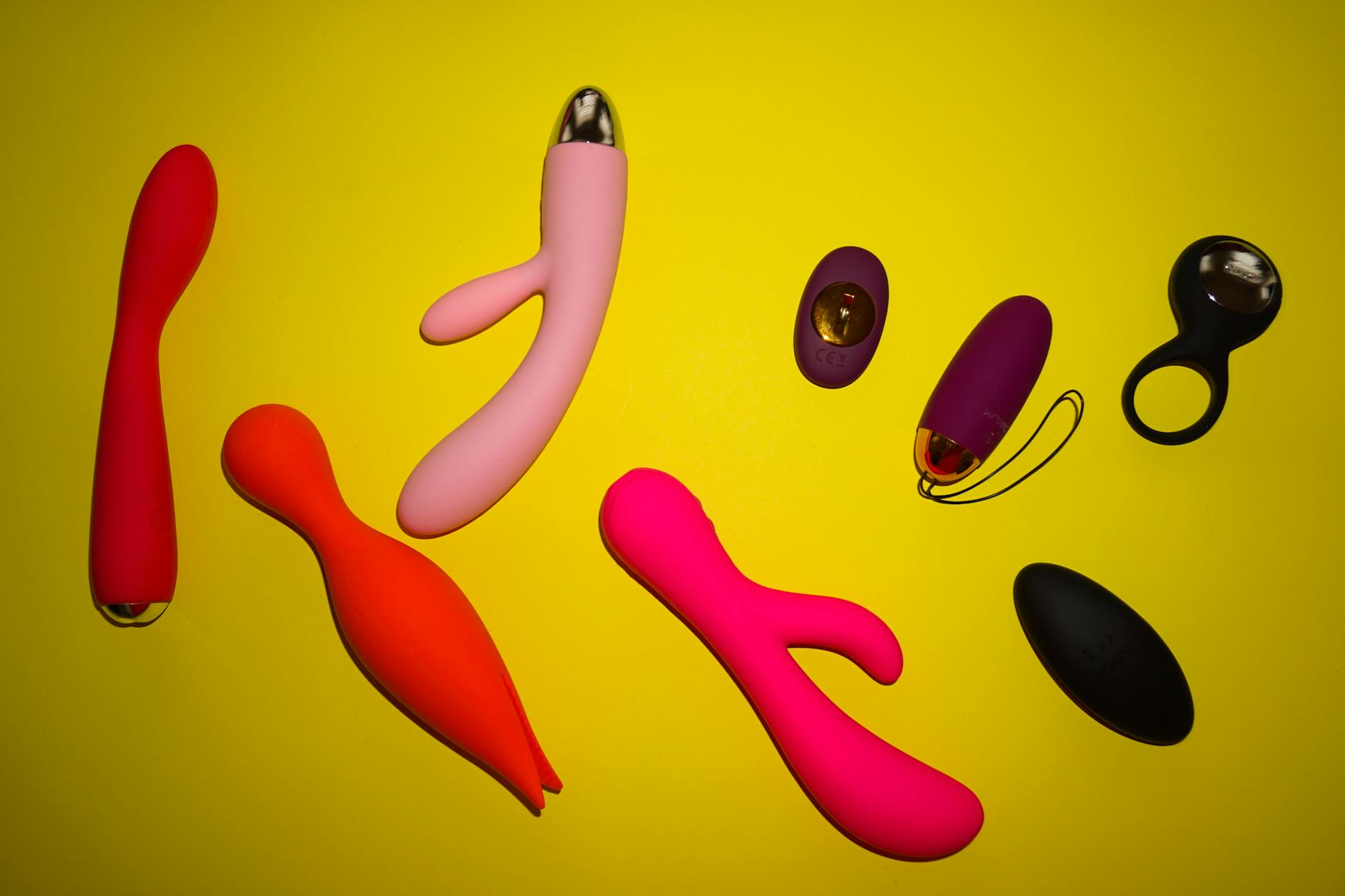
Let's be real about desire disappearing
Life throws something at you. A job ends. You move across the country. Someone you love gets sick. Your relationship hits a rough patch. And then your desire just... vanishes. Not because something's broken with your body or your partnership. Because your nervous system is in triage mode, your brain is full of logistics and worry, and pleasure feels like a frivolous distraction.
This is not the same as depression, though it can coexist with it. This is what happens when life transitions demand all your bandwidth. And almost nobody talks about how to rebuild physical desire when the actual problem isn't physical at all.
Why major transitions tank libido before anything else
Your body has a priority hierarchy. At the top: safety, survival, basic functioning. Somewhere near the bottom: orgasms. When you're stressed, grieving, adjusting to a new job, or managing relationship turbulence, your nervous system isn't sending a lot of blood flow or attention to pleasure centers. It's too busy keeping you alert.
This is neurologically sound. Your prefrontal cortex, which handles decision-making and pleasure, quiets down. Your amygdala, which processes threat and emotion, gets louder. Desire requires a certain amount of mental availability and safety that honestly, life transitions often steal.
The second part is relational. Life changes shift the dynamic between partners. One person gets promoted; the other feels invisible. Someone moves in; another person feels their independence shrinking. A family crisis pulls attention outward. Physical intimacy becomes something you "should" want instead of something that naturally emerges. That gap between desire and obligation kills connection faster than anything.
How your body actually recovers pleasure after disruption
It's slower than you'd think, and it doesn't follow a straight line. In my practice, I work with couples where one or both partners have experienced a major transition. The ones who recover fastest aren't the ones who try to force things back to normal. They're the ones who rebuild pleasure from zero, without pressure.
That's where lemon vibrators come in, actually. Air-suction clitoral vibrators like the Lem remove the performance expectation entirely. You don't need arousal to begin with. You don't need your partner present or perfectly attuned. You don't need to be "in the mood." You need five minutes, a little privacy, and a tool that does the work for you.
When your nervous system is flooded with transition stress, your body often can't generate arousal on command. But clitoral stimulation from a lemon sucker can bypass that. The sensation itself can wake up desire that your brain isn't currently producing. It's not about forcing pleasure. It's about reminding your body what pleasure feels like, then letting that sensation inform your nervous system that safety exists.
The specific way lemon vibrators help rebuild desire after life upheaval
Four things make them uniquely useful during transitions:
1. They require no partner cooperation. If your desire is tanking because you're navigating a relationship tension, you need a tool you can use solo. A Lem vibrator doesn't depend on someone else's mood, timing, or presence. That independence matters. It lets you rebuild your own baseline of pleasure without adding relationship management to the mix.
2. They work with low-arousal states. Traditional vibrators often feel like too much stimulation when you're not already revved up. The Lem uses suction instead of buzzing, which engages the clitoris differently. If you're starting from a place of zero arousal because you're stressed, suction can feel less jarring. It can actually generate arousal rather than demand it.
3. They're genuinely fast. Life transitions are exhausting. You don't have energy for 40 minutes of foreplay. A lemon clitoral vibrator can deliver an orgasm in 5 to 10 minutes. That's relevant. That's doable on a Tuesday when you're running on fumes.
4. They remind you that pleasure is still available. Desire doesn't come back because you decided to be better about it. It comes back slowly, through consistent signals to your nervous system that pleasure is safe and within reach. Using a lem vibrator regularly, even just twice a week, is a way of saying to your body: "We're not canceling pleasure. We're just rebuilding it at the pace that makes sense right now."
How to actually start using a lemon vibrator when motivation is gone
Here's the practical version of what I tell clients.
Pick a time that has zero other demands. Not right before bed when you're exhausted. Not in the morning when you're rushing. Maybe a Saturday afternoon or a Tuesday lunchbreak if you work from home. The point is: you need enough mental space that this doesn't feel like one more obligation.
Start with no goal. Not "I'm going to have an orgasm." Not "I'm going to feel aroused." Just "I'm going to try this and notice what happens." That sounds silly, but the moment you add performance pressure, you've replicated the exact nervous-system pattern that killed your desire in the first place.
Use the Lem or another quality lemon clitoral vibrator at low settings. The suction should feel pleasant, not intense. If nothing happens the first time, that's fine. You're not broken. You're just warming up a part of your nervous system that's been offline.
Repeat this twice a week for two to three weeks before you evaluate anything. Desire is slow. It's also cumulative. You won't wake up on day three suddenly ravenous. You'll notice, maybe after ten sessions, that you think about sex slightly more often. Then you'll notice it feels less like a chore.
What changes in your partnership while you're rebuilding
Here's the thing nobody mentions: while you're using a lemon vibrator solo to rebuild your baseline of pleasure, your partner needs to understand what's actually happening. They need to know this isn't a rejection. It's a resource.
If you're partnered, have one conversation about this. Something like: "I know my desire has been pretty much gone since [the move / the job stress / whatever it is]. That's not about you or us. I'm going to start using a vibrator solo for a little while to remind my body what pleasure feels like. This helps me get back to wanting physical connection with you." Then you don't have to defend it again.
Many partners worry that a solo tool means they're less needed or wanted. The truth is the opposite. You're actually clearing the pathway back to partnership by not forcing yourself to perform desire you don't yet feel.
When desire still isn't returning after six to eight weeks
If you've been using a clitoral vibrator regularly and your desire is still completely flatlined, something else might be happening. Depression, burnout, or unresolved relationship conflict can all tank libido independently of circumstance.
At that point, it's worth talking to a therapist or a doctor. Not because you're broken, but because your body might need more support than a tool can provide. Burnout, for example, often needs actual rest and professional intervention. Unresolved conflict needs the conversation you've been avoiding. Neither of those is solved by lemon vibrators, no matter how good they are.
But for the garden-variety desire crash that comes with a major life transition? A lemon sucker is genuinely one of the fastest ways to remind your nervous system that pleasure is still available to you.
FAQ: Desire, transitions, and getting it back
How long does it actually take to rebuild desire after a life change?
There's no standard timeline, but in my practice I usually see meaningful shifts after four to six weeks of consistent solo exploration. That assumes the external stressor is also stabilizing. If you're still in crisis mode, it takes longer. Your body needs the transition to feel somewhat settled before pleasure can reemerge.
Can you use a lemon vibrator during a depressive episode?
Yes, though it works differently. Depression physically dampens sensation, so you might not feel much. But using it anyway is sometimes helpful because it's a gentle way of reconnecting with your body without pressure. If you're in a significant depressive episode, though, pair it with professional support. A vibrator isn't a substitute for therapy or medication.
What if my partner is hurt that I'm using a vibrator instead of being intimate with them?
This is worth a direct conversation. Most partners worry that a tool means they're failing somehow. It helps to be specific: "Right now my desire is offline because of stress. Using this helps me rebuild my baseline. It's not about you being insufficient. It's about me needing to regain access to my own pleasure first." If the hurt persists, couples therapy can help you both understand what's actually beneath the reaction.
Do lemon vibrators work if you've been numb for a long time?
Often yes, better than traditional vibrators actually. The suction sensation on a lem vibrator engages the clitoris differently than buzzing does. If you've been numb for months or years, suction can sometimes "wake up" sensation that direct vibration doesn't reach. That said, if you've been numb for a very long time, the numbness might be medication-related or neurological. Talk to a doctor if it's been longer than six months.
Is it normal to feel guilty about rebuilding pleasure alone during a relationship crisis?
Completely normal, and also worth examining. The guilt often hides a belief that your pleasure is supposed to come from your partner, or that wanting it solo is selfish. It's neither. Rebuilding your own capacity for pleasure is actually foundational to rebuilding partnership. You can't connect sexually until you remember what your own body needs.
What if nothing works and I still feel no desire?
Then the problem probably isn't physiological, and a vibrator won't fix it. Persistent desire loss during a life transition might signal depression, relationship disconnection that runs deeper than circumstance, or burnout that needs actual intervention. That's when professional support matters more than any tool.
The real way desire comes back
It's not through forcing it. It's not through obligation or schedule or trying harder. It comes back when you stop treating pleasure as a symptom of normal life and start treating it as something worth rebuilding deliberately, at whatever pace your nervous system can actually manage right now.
Lemon vibrators, clitoral suckers, and other air-suction tools are useful partly because they work on your body. But honestly, they're most useful because they say something true: pleasure is still available to you, even when everything else feels chaotic.
If you're navigating a major life transition and your desire has vanished, the most important thing you can do is start small. Twice a week. Five minutes. Low pressure. The Lem or another quality lemon clitoral vibrator can be that starting point. Your body will remember what pleasure feels like. Your nervous system will start to trust that safety exists again.
Then, once you've rebuilt your own baseline, you can decide what partnership intimacy looks like from that restored place. You might want to explore more with a partner. You might find that rebuilding solo pleasure is enough for a while. Either way, you're building from stability, not from depletion.
That matters. It changes everything.
If you're struggling with desire after a transition and you're not sure where to start, we're here. Get in touch and we can talk through what makes sense for your situation.