Here's what nobody tells you about pleasure
Your lemon vibrator isn't the variable. You are. And that's not a flaw—it's information.
If you've noticed that a lemon clitoral vibrator feels incredible one week and kind of meh the next, you're not imagining it. Your arousal sensitivity, tissue responsiveness, and orgasmic intensity shift measurably throughout your cycle. Understanding this pattern doesn't just explain the inconsistency. It lets you work with your body instead of against it.
What actually changes in your body
Estrogen and progesterone are doing a complex dance all month long. This isn't just about your mood or your desire (though both shift too). It's about the literal physical capacity of your tissues to feel sensation.
During the follicular phase, right after your period starts, estrogen is climbing. Your blood flow increases. Tissue swells slightly, which means more nerve endings get activated when you use a lemon vibrator. Touch feels sharper. Sensation travels faster through your nervous system. For many people, this is peak pleasure time—orgasms come faster and feel more intense.
Then comes ovulation, around day 14. Estrogen peaks. Some people report their most explosive sensations happen right here. Others find the intensity almost too much and prefer lower settings on their device.
The luteal phase is different. After ovulation, progesterone rises. Your nervous system becomes less reactive. Sensation dulls slightly. A setting on your lem vibrator that felt perfect last week might feel weak now. This isn't the device failing you. Your baseline sensitivity genuinely changes.
Right before your period, progesterone and estrogen both plummet. Tissue thins. Arousal takes longer to build. Many people find they need more time, more lubrication, and lower intensity settings. Some skip pleasure entirely during this window because it feels frustrating rather than good.
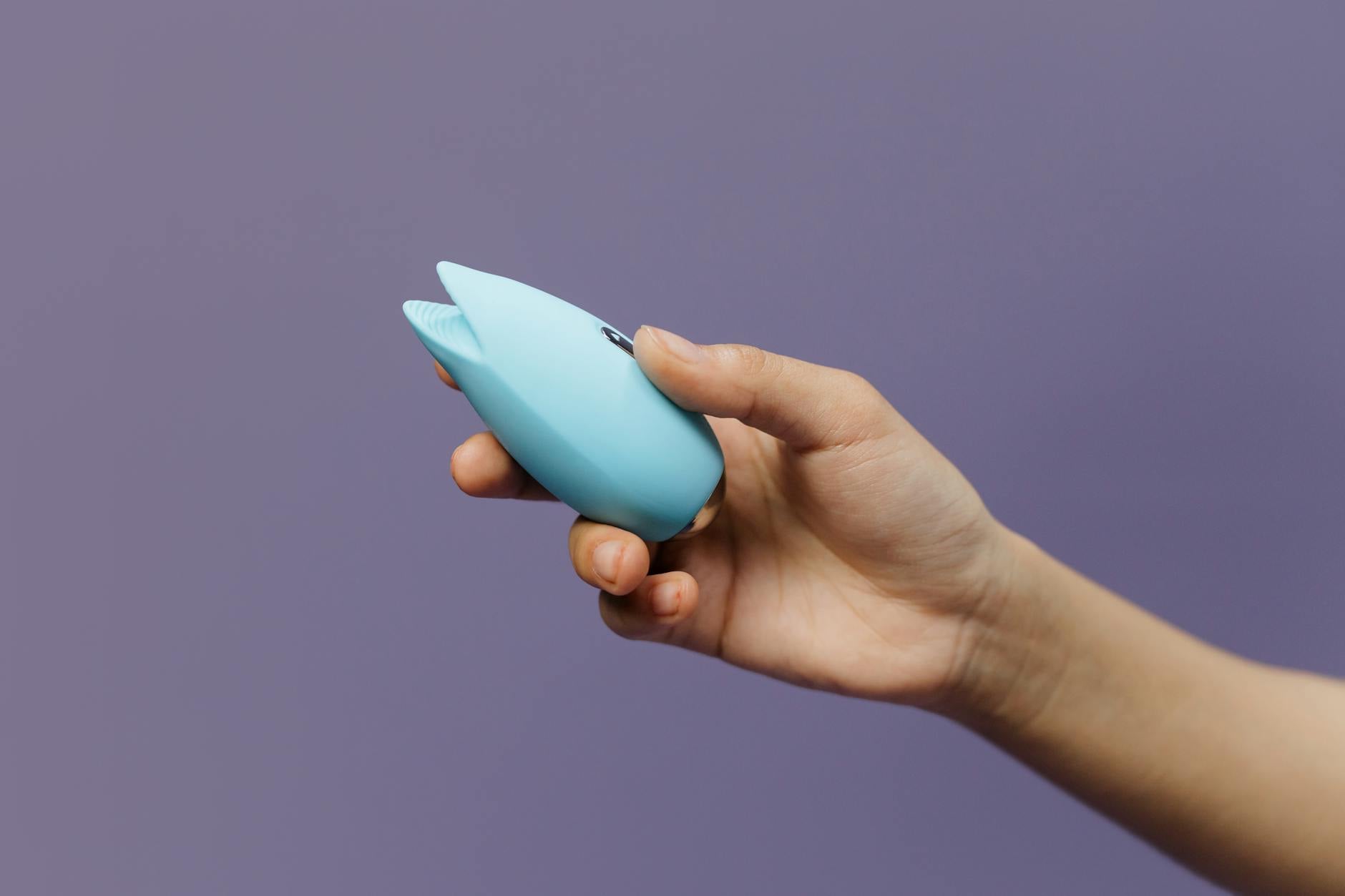
Photo by cottonbro studio on Pexels
Why lemon vibrators respond to these shifts
A lemon clitoral vibrator works through pulsing suction and vibration. Both depend on tissue firmness and blood flow to feel optimal. When tissues are more engorged (high estrogen), even gentle suction feels powerful. When tissues are thinner and less vascularized (high progesterone), the same setting can feel almost useless.
This is why seasoned users of Hello Nancy's lem vibrator or other lemon adult toys often say they use different settings at different times in their cycle. It's not inconsistency. It's adaptation.
The clitoral nerve has about 8,000 nerve endings, but their responsiveness isn't constant. Estrogen makes those nerves fire faster and more reliably. Progesterone mutes that sensitivity. So a lemon sucker that delivered reliable, intense stimulation during your follicular phase might need a boost in intensity settings once you hit day 20 of your cycle.
Tracking your own pattern
Here's the practical part: most people need to pay attention for 2-3 cycles before a clear pattern emerges. Everyone's timeline is different.
For the next three months, keep a simple note. On days you use a lemon vibrator or any clitoral toy, jot down: What day of your cycle are you? What intensity setting did you use? How long did it take to reach orgasm? How did it feel compared to last week?
You're not looking for perfection. You're looking for patterns. You might notice that days 10-16 require pattern 2, but days 18-26 need pattern 3 or 4. You might find that days 1-5 feel best with extra lubrication and longer warm-up. You might discover that days 25-28 aren't your pleasure time and that's completely okay.
Once you see the pattern, you can plan around it. Want to maximize sensation? Aim for your high-estrogen window. Feeling less responsive? Give yourself permission to skip that day or adjust your approach entirely.
What kills the pattern (and what doesn't)
Stress, sleep, and mental state matter wildly. A week of poor sleep can flatten your response across all cycle phases. A stressful work deadline can suppress arousal even during your peak-sensitivity window. These aren't hormonal, but they're real and they override cycle timing.
Contraceptive hormones also change the equation. If you're on hormonal birth control, your natural cycle is suppressed. Many people on the pill report more consistent (though sometimes lower overall) sensation throughout the month. This isn't better or worse—it's just different. Some people prefer the predictability.
Partner dynamics matter too. If you're managing relationship tension or feeling resentful, even your peak-sensitivity days might feel flat. Pleasure isn't just physiological. It's relational.
Making lemon sexual toys work for your cycle
The most straightforward adjustment: know your device settings like you know your body. A quality lemon vibrator like the Lem has multiple intensity levels for exactly this reason. Don't treat them as a one-size-fits-all tool.
During high-estrogen phases, you might use the device for shorter sessions because sensation builds so fast. During low-estrogen phases, longer warm-up and higher intensity might be your baseline.
Lubrication becomes increasingly important as you move through your cycle. High-quality water-based lube isn't cheating or a sign something's wrong. It's a simple acknowledgment that tissue responds better when it's supported.
Timing matters. If you've got a partner, knowing your high-sensitivity window means you can plan intimate time when your body will respond most reliably. If you're solo, understanding your cycle means you're not frustrated by a week of less-intense sensation—you're prepared for it.
Also consider this: the luteal phase isn't a failure state. Some people report that their most emotionally satisfying experiences happen during lower-sensation weeks because there's less pressure to achieve intensity. Pleasure has many flavors.
When something feels truly off
There's a difference between normal cycle-based variation and genuine dysfunction. If sensation has completely disappeared across multiple cycles, or if pain has appeared where there wasn't any before, see a doctor. Hormonal changes, thyroid issues, or medication side effects can all suppress arousal beyond normal cycle variation.
Similarly, if you're on a new hormonal contraceptive and your response has flatlined after three months, that might be worth discussing with your prescriber. Some formulations genuinely suppress arousal more than others.
But most of what you're experiencing—the week where your lemon clitoral vibrator feels like magic, and the other week where it feels ordinary—is normal physiology. It's not a flaw in the device. It's not a flaw in you.
How this changes everything
Once you understand that arousal cycles are biological, not personal, you stop blaming yourself for variation. You stop assuming your lemon vibrator is broken. You stop wondering if something's wrong with your body.
Instead, you work with what you've got. You plan around peak sensitivity. You adjust settings based on where you are in your cycle. You bring extra lubrication when you need it. You give yourself permission to skip days when sensation feels muted.
This isn't settling. This is understanding how your body actually works and respecting that intelligence. Your cycle isn't an obstacle to pleasure. It's a map.
People also ask
Does my cycle affect all types of clitoral vibrators equally?
Yes and no. Cycle phase affects all clitoral vibrators because it's a tissue and nerve response, not device-specific. But the intensity and type of stimulation matter. Lemon vibrators that use suction might feel even more pronounced during high-estrogen phases because tissue engorgement amplifies the effect. Wand vibrators might feel less affected because they work through broad vibration rather than targeted suction. Your best approach is to notice what works for you across your cycle.
Can I use a lemon vibrator during my period?
Absolutely, if you want to. Some people find that orgasm during menstruation relieves cramps and feels great. Others prefer to skip it because sensation feels different or because they're uncomfortable with penetration or external play during bleeding. There's no right answer. If you do use a lemon clitoral vibrator during your period, just make sure you've cleaned it well beforehand and that you're using a water-based lubricant.
Why does my orgasm feel weaker in the second half of my cycle?
Progesterone. In your luteal phase (after ovulation), progesterone rises and estrogen drops. Both changes reduce tissue engorgement and mute nerve sensitivity. Orgasms are still possible, but the physical intensity often decreases. This is temporary and completely normal. Some people find that longer warm-up time or additional stimulation helps. Others accept the gentler sensation as part of that cycle phase.
Does tracking my cycle actually help me use my device better?
Yes, if you follow through. Most people find that after 2-3 months of noting what works when, they stop fighting their body and start working with it. You'll know which intensity settings to reach for, which phase needs more lube, and which windows might not be your pleasure time. This takes the guesswork out of why things feel inconsistent.
What if my cycle is irregular or I'm not menstruating?
The hormonal rhythm still matters if you have ovaries, even if your cycle isn't regular. Estrogen and progesterone fluctuate in patterns. If you're not menstruating due to hormonal contraception, breastfeeding, or other factors, your baseline might be more stable but still affected by hormonal shifts. Pay attention to what actually feels good rather than trying to match a textbook cycle.
Can I use lemon sexual toys more frequently during my high-sensitivity phase?
Yes. During your follicular phase and ovulation window, when sensation is heightened, your body can absolutely handle more frequent use. Just listen to what feels good and stop if you notice irritation. In lower-sensitivity phases, you might naturally use your lem vibrator less because the experience is less immediately rewarding, and that's fine. Your body is telling you something useful.
The bottom line
Your lemon vibrator isn't inconsistent. Your arousal is cyclical. That's not a problem to fix. It's a pattern to understand. Once you do, every session with your device becomes smarter, more intentional, and often more satisfying. Your body knows what it needs throughout the month. Learning to listen is the real skill.