Let's talk about the thing nobody names
You and your partner love each other. You're attracted to them. But right now, in this specific moment, your arousal isn't happening at the same time or in the same way as theirs. Maybe they're ready before you are. Maybe you're ready and they're not. Maybe one of you is in the room and the other is, emotionally, somewhere else entirely. It's not rejection. It's not a sign the relationship is broken. It's one of the most common friction points in long-term partnerships, and it shows up in about half the couples I work with.
The conversation usually starts like this: "I love them, but we're just not synced anymore." What that really means is arousal is happening on different schedules, in different bodies, at different intensity levels. And the longer you ignore that mismatch, the more it starts to feel like a personal failure instead of just a logistics problem.
Here's the thing. A lemon clitoral vibrator doesn't fix a relationship problem. But it does solve the arousal timing problem, which often lets the relationship problem breathe.
Why arousal gets out of sync in the first place
It's not random. There are actual reasons arousal stops happening in parallel.
Hormone shifts are real. If you menstruate, your arousal naturally fluctuates across your cycle. Some weeks you're ready in 90 seconds. Other weeks you need 20 minutes of dedicated attention. Your partner's arousal doesn't fluctuate the same way. This isn't compatible if you try to force it.
Desire patterns are different. Some people operate on responsive desire (arousal builds as stimulation happens). Others have spontaneous desire (arousal arrives first, then you want stimulation). Mix those two in a partnership and you get a situation where one person is always waiting for the other to catch up.
Life loads are unequal. One of you might be carrying more stress, more mental labor, more fatigue. That's not fair or balanced, but it changes arousal capacity in the moment, regardless of how much you love the other person.
Routine creates drag. After years together, the novelty that used to trigger automatic arousal is gone. This is actually healthy. It means you've moved past the honeymoon phase. But it also means arousal requires more intention, not less. Many couples mistake this for dying attraction when it's just the normal arc of long-term sex.
How disconnected arousal actually plays out
Three patterns I see constantly:
Pattern One: The Eager/Reluctant Dynamic. One partner is ready. The other needs convincing. The ready partner waits, feels rejected, starts resentful. The reluctant partner feels guilty and pressured. Nothing kills arousal faster than guilt. So the reluctant partner performs arousal they don't actually feel, which the eager partner can sense, which makes both of them feel worse.
Pattern Two: The Parallel Play Problem. You're both interested, but your bodies are on different schedules. One person reaches climax in five minutes. The other needs 15. You're trying to time everything together, which means either the fast person stops (frustrating) or the slow person is rushed (frustrating). Both of you end up unable to focus on what actually feels good.
Pattern Three: The Presence Gap. You're physically there together, but emotionally one of you is still working, parenting, worrying. The person who's checked out doesn't realize they're doing it. The person who showed up with intention feels invisible. Intimacy halts.
Where lemon vibrators actually help
I recommend lemon clitoral vibrators in these situations specifically because they solve the timing problem without requiring your partner to do anything differently.
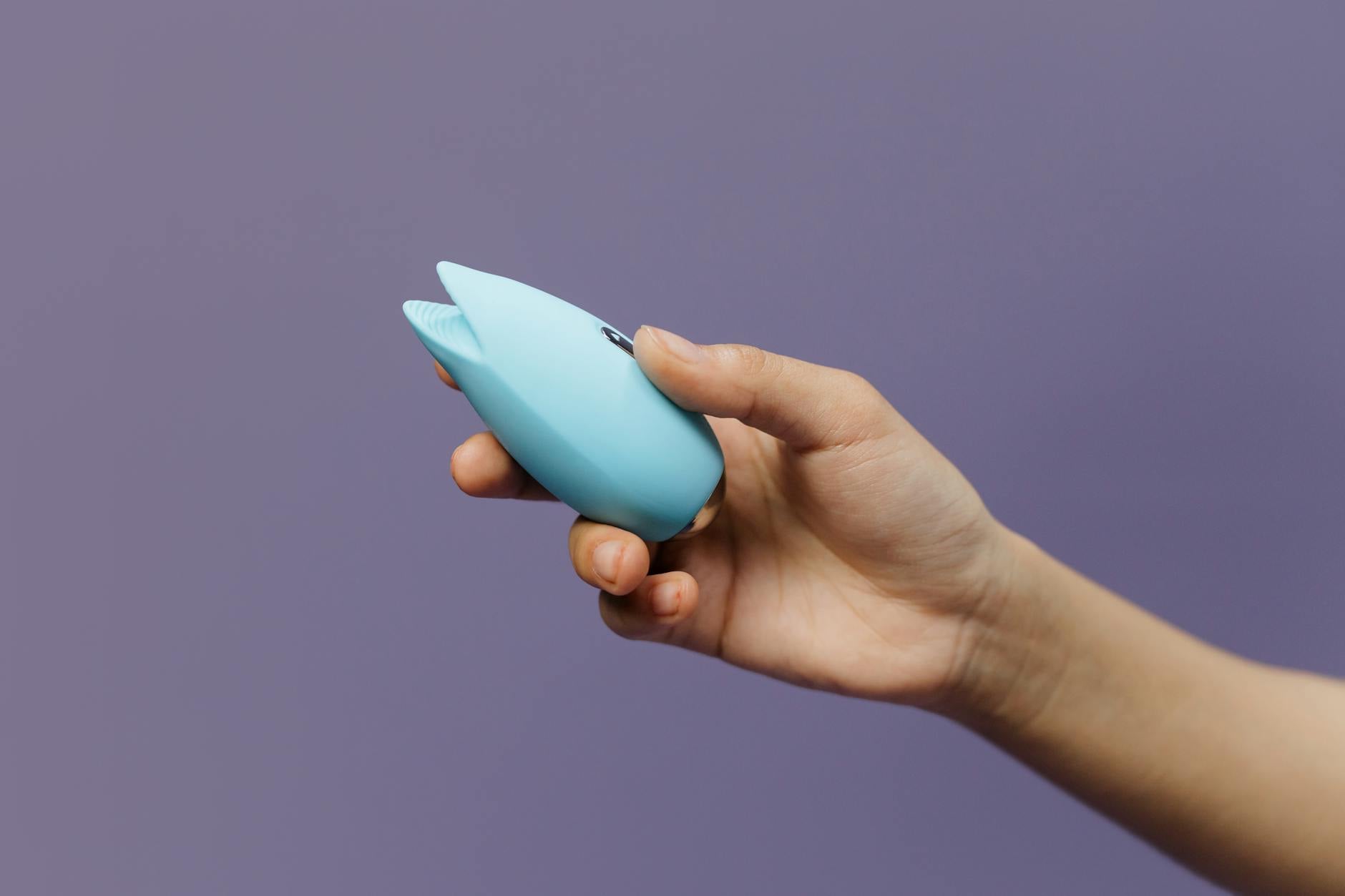
Honestly? A lemon vibrator like the Lem changes what's possible in under a minute. If you're the person who needs longer to build arousal, you can create that response on your own timeline. If your partner is ready before you are, you're not making them wait while performing interest. You're both actually present.
This matters because it removes resentment from the equation. You're not a problem to be solved. You're just someone with a different arousal rhythm. The vibrator bridges that gap.
For the eager partner: A lemon sucker gives you something to do while your partner builds their own arousal. It's not a replacement for partnered attention. It's a parallel activity that feels intimate and shared instead of like waiting or performing.
For the slower-arousal partner: You get to focus entirely on what makes your body respond without pressure to perform at someone else's pace. Many people find that when they remove the "keep up" pressure, arousal actually arrives faster.
For both: A lemon vibrator invites a conversation about what pleasure actually looks like for each person. "I'd like us to try using something together" is a much easier opening than "I feel disconnected from you." It moves the problem from emotional to practical, which is way easier to solve.
How to actually use them together
If you're thinking about bringing a lemon clitoral vibrator into partnered sex, here's what actually works:
Start with curiosity, not expectation. "I've been thinking about trying something. Are you interested in exploring this together?" Not "I need this because you're not doing it right." The frame matters.
Pick a low-pressure moment to buy it. Not the night you're trying it. Not when arousal is already happening. Just, "I ordered something, want to look at it together?" Removes the weird urgency.
The first time, your partner probably shouldn't be using it. You should. Let them watch, learn what you like, be present. This builds comfort and curiosity. Next time, maybe they use it on you. Eventually, you both use toys during the same encounter.
Lemon vibrators work especially well because they're quiet and intuitive. You don't need 10 minutes of instructions. You put it on your clitoris, adjust the intensity, and your body does the rest. There's no learning curve, which means you can focus on connection instead of figuring out equipment.
Talk about timing, not performance. "When I use this, I can get aroused faster and actually focus on you instead of trying to catch up" is honest and practical. It's not a reflection on your partner.
When disconnected arousal points to something bigger
I'll be direct: sometimes a vibrator helps. Sometimes it masks a bigger issue.
If the arousal disconnect is the only symptom, a tool often fixes it. But if you're also not talking, not touching outside of sex, not laughing together, not making decisions as a team, then the arousal timing is just the loudest symptom of a disconnection problem. A lemon vibrator can help when you're returning to pleasure after relationship trauma, but it can't fix a partnership that's actually fractured.
That's when you need a different kind of tool. Therapy, conversation, a reset on how you're spending time together. A clitoral vibrator gets you to the same physical place at the same time. It doesn't rebuild emotional intimacy if that's missing.
The actual shift that happens
When arousal is synchronized, something else opens up. You're both in your bodies instead of watching the clock. You're both focused on sensation instead of timing. You're both actually there.
That's not a small thing. That's the difference between sex that feels functional and sex that feels like you're actually together. And most couples find that once that shifts, the disconnection starts dissolving on its own.
A lemon vibrator doesn't repair relationships. It removes one specific friction point so the relationship can actually breathe. After that, everything gets easier.
Frequently asked questions
What if my partner thinks using a vibrator means I don't want them?
This is the most common fear, and it's worth addressing directly. Frame it as addition, not replacement. "I want more time where we're both present and aroused together. This helps that happen." Most partners soften when they understand that a clitoral vibrator gets you ready faster, not away from them. How Lemon Vibrators Help When Your Partner Is Skeptical About Toys covers this in detail.
Can we both use lemon vibrators during sex?
Absolutely. Two people with two clitoral vibrators can both reach that responsive arousal state together. Some partners find that when they're both getting external stimulation, the pressure to perform drops and they can actually focus on touching each other. It's collaborative, not competitive.
How do I bring this up without it feeling like rejection?
Don't bring it up mid-sex or after a disappointing sexual encounter. Pick a normal Tuesday over tea. "I've been reading about how different people's arousal works, and I realized we might be on different timelines. I found something that might help both of us actually be present together." Curiosity, not criticism.
Does using a lemon vibrator together make things less intimate?
Most couples find the opposite. When you're not managing timing anxiety, you can actually pay attention to each other. You're not watching the clock or monitoring performance. You're both physiologically present, which creates more room for actual connection.
What if one of us climaxes and the other hasn't?
A lemon clitoral vibrator means whoever finishes first can stay aroused and engaged without pressure. They can hold the vibrator, participate in their partner's pleasure, pay attention. It's actually more continuous than trying to restart after one person finishes.
Is using toys during partnered sex normal?
Yes. Research consistently shows that couples who use vibrators together report higher satisfaction with their sex life and more consistent communication about pleasure. It's become the norm, not the outlier.
The bottom line
Disconnected arousal isn't a relationship failure. It's a timing issue. And timing issues have solutions. A lemon clitoral vibrator is one of them. It doesn't fix what's emotionally broken, but it creates space for connection to actually happen. Once that space opens, most couples find the rest follows naturally.
Your arousal deserves attention. So does your partner's. A vibrator just means you both get it at the same time.
If you're ready to explore this together, start with a conversation, then visit our shop to find what works for both of you.